Intermedial Temporalities
UCSD doctoral research.
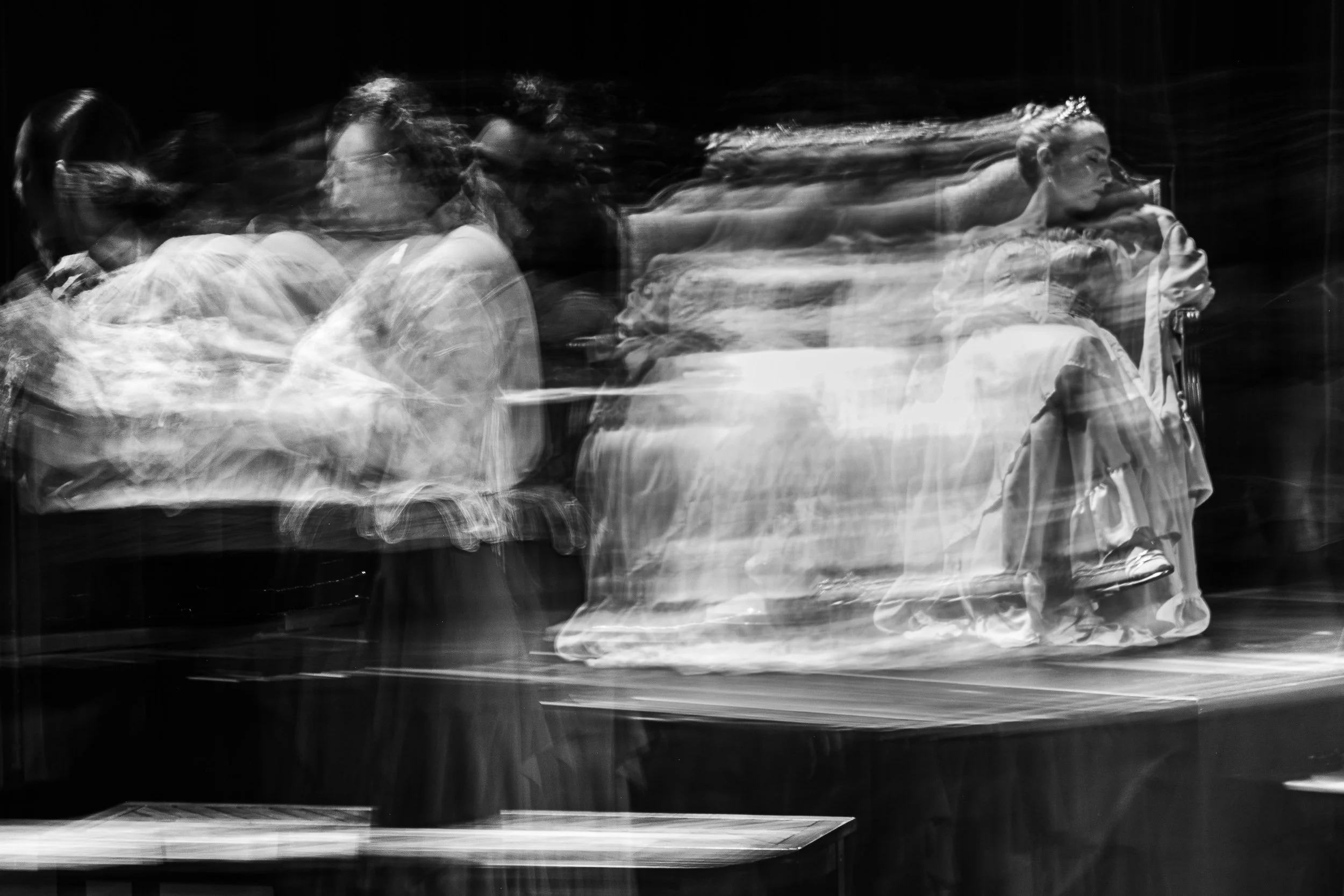
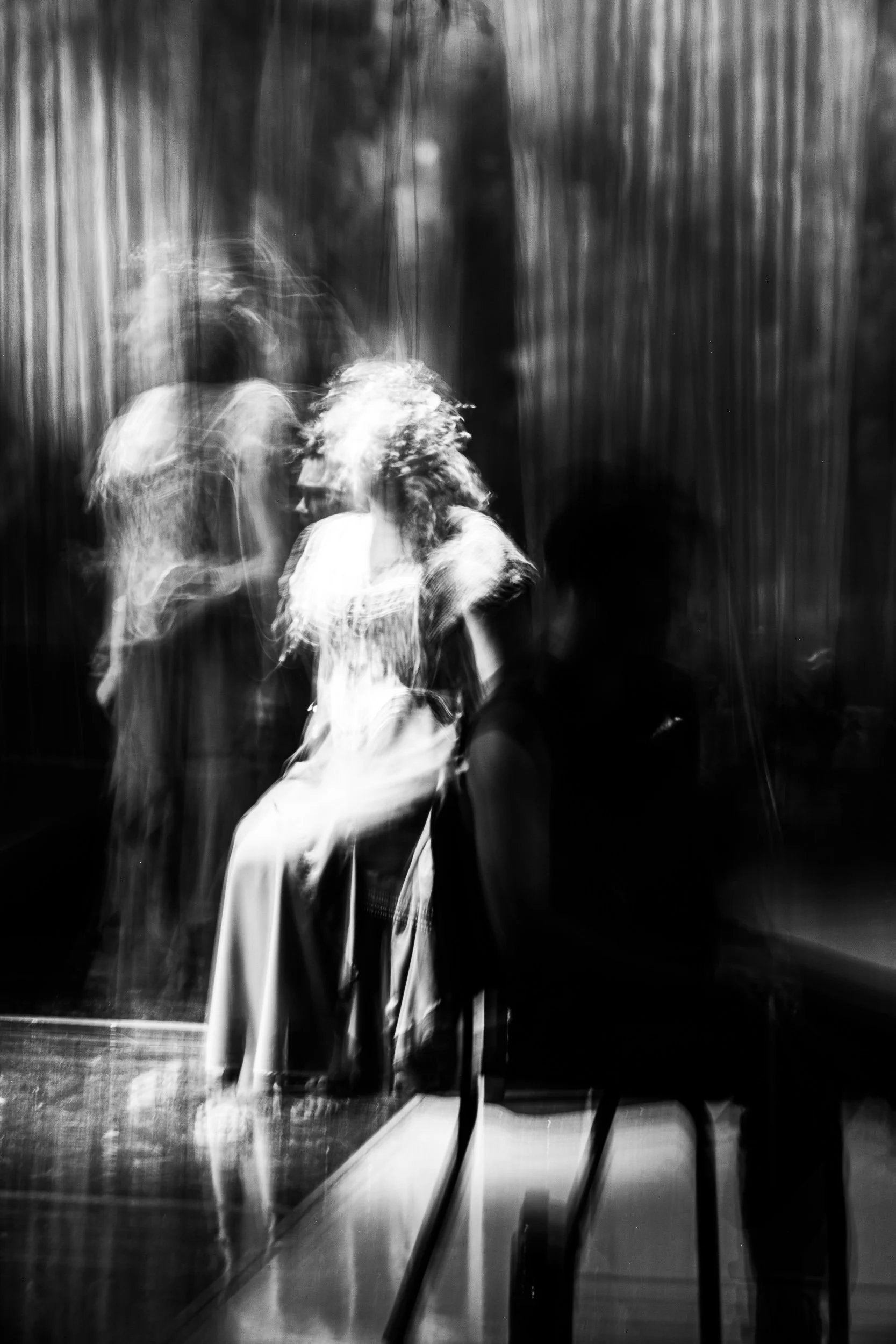
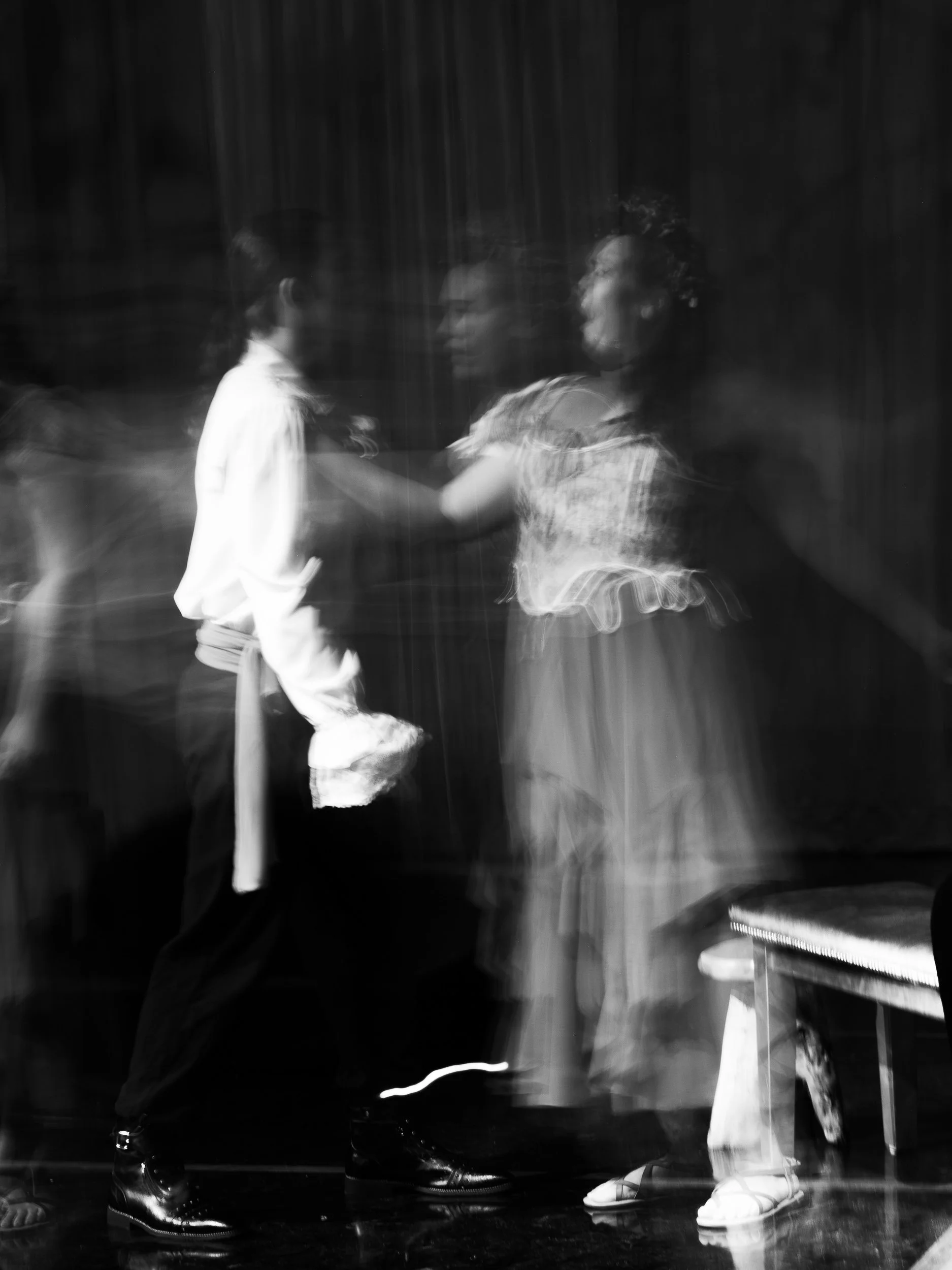
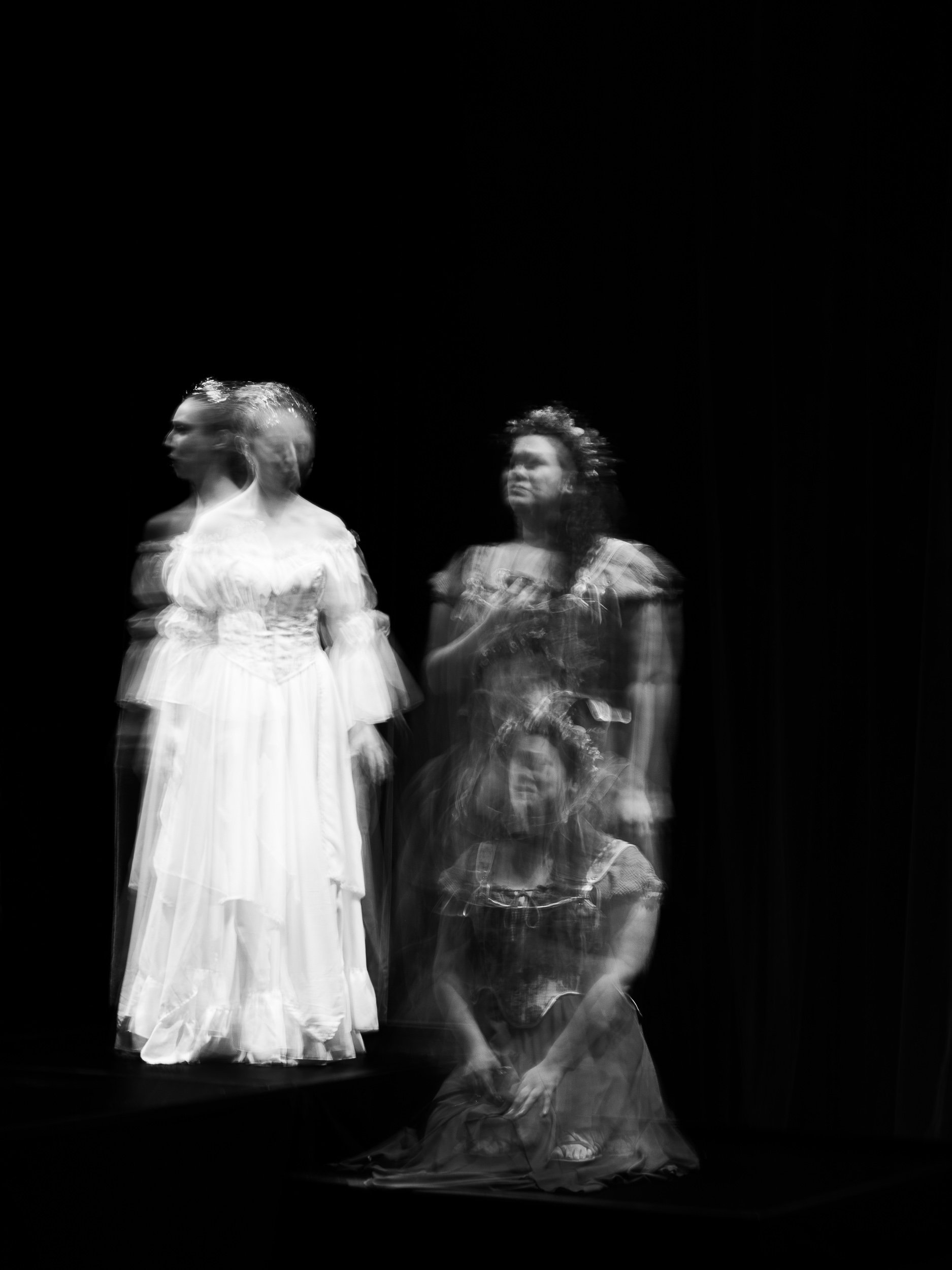
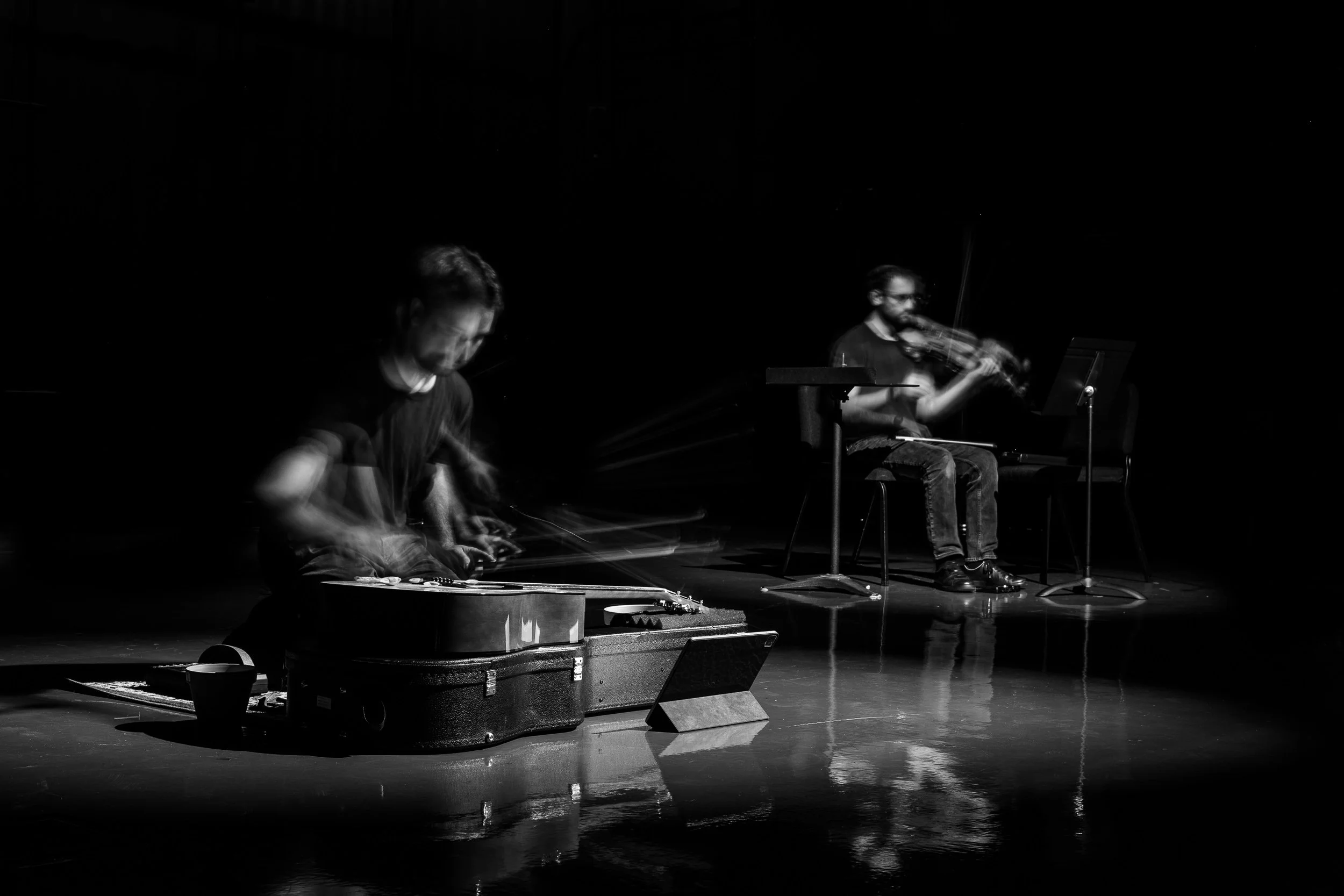
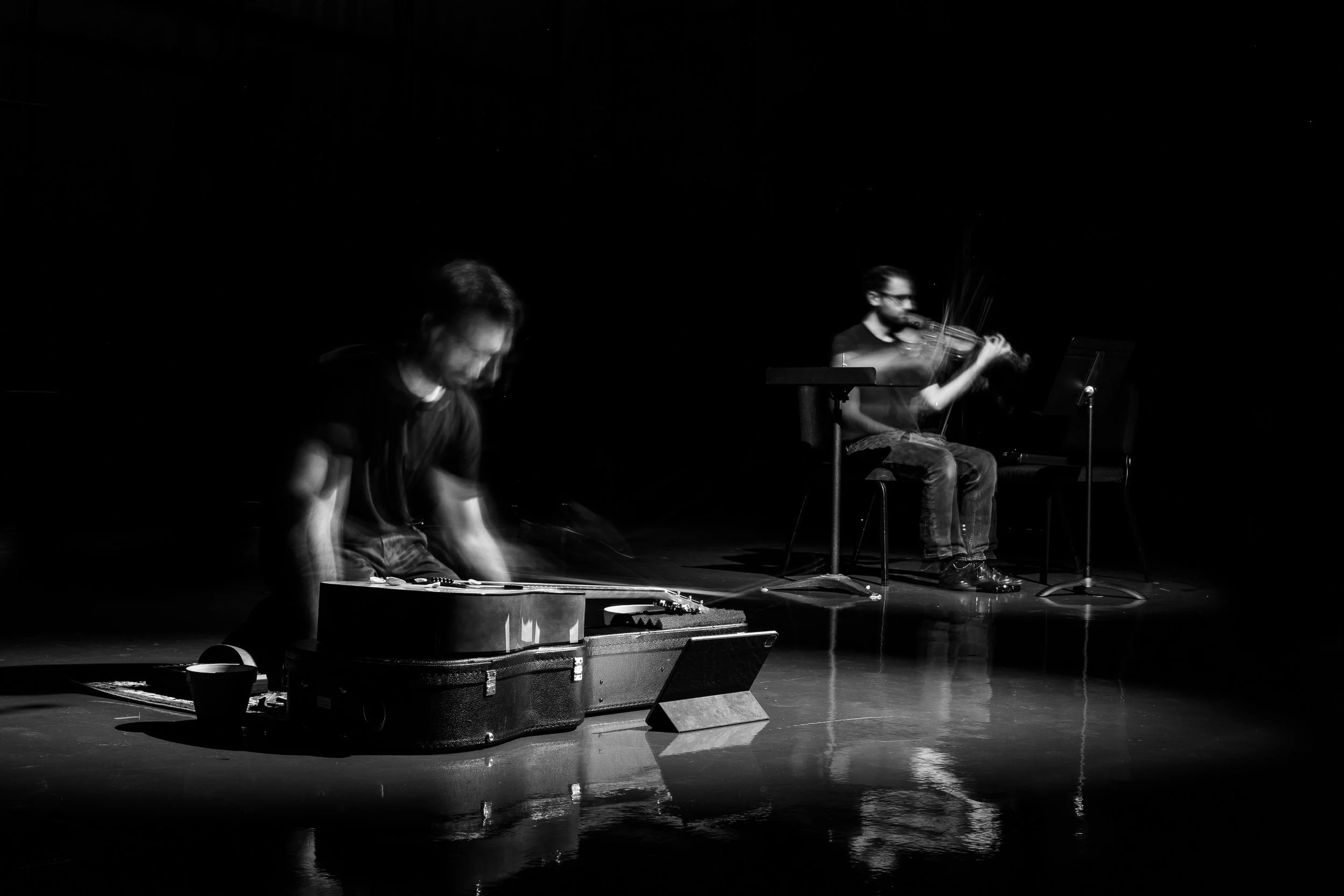
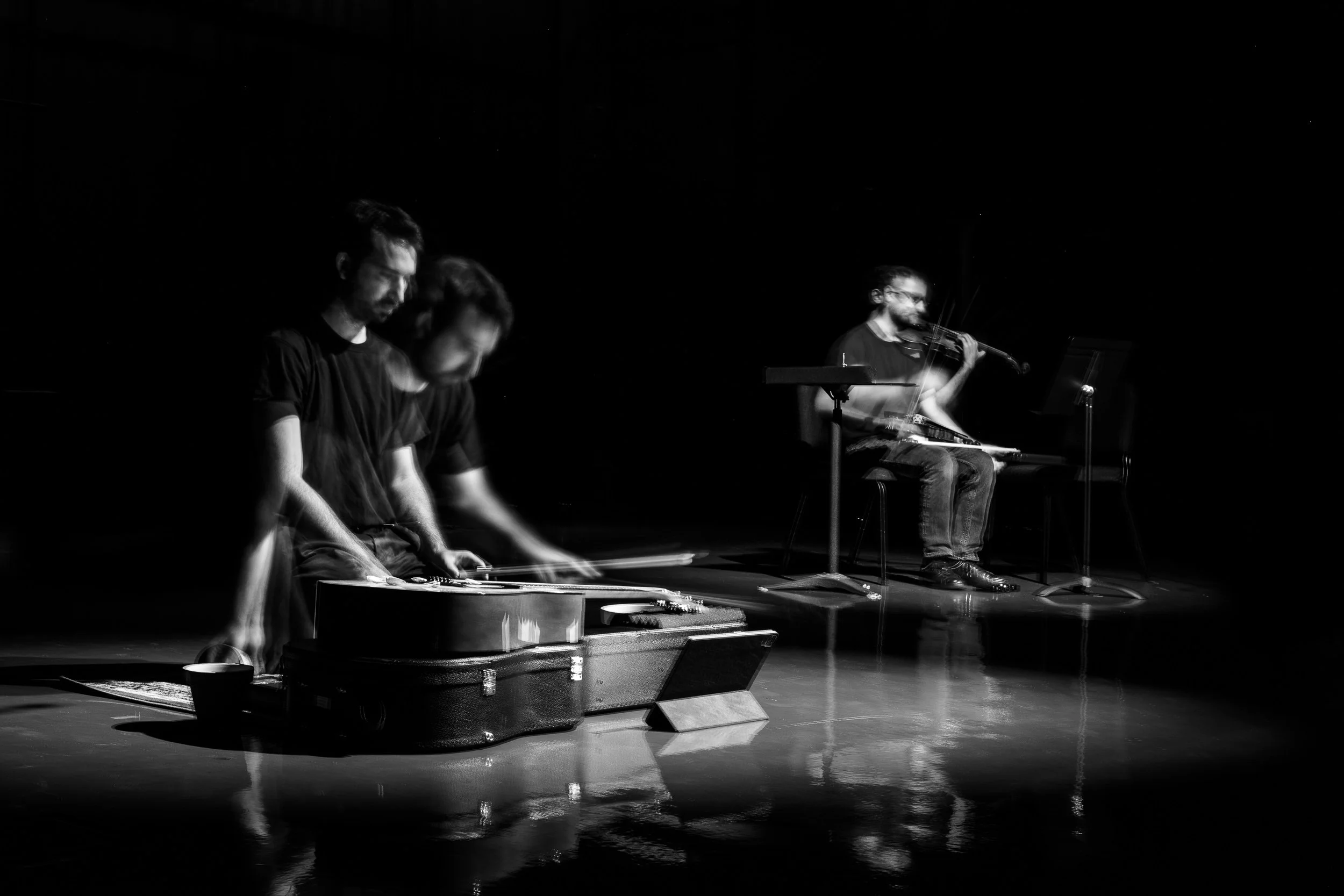
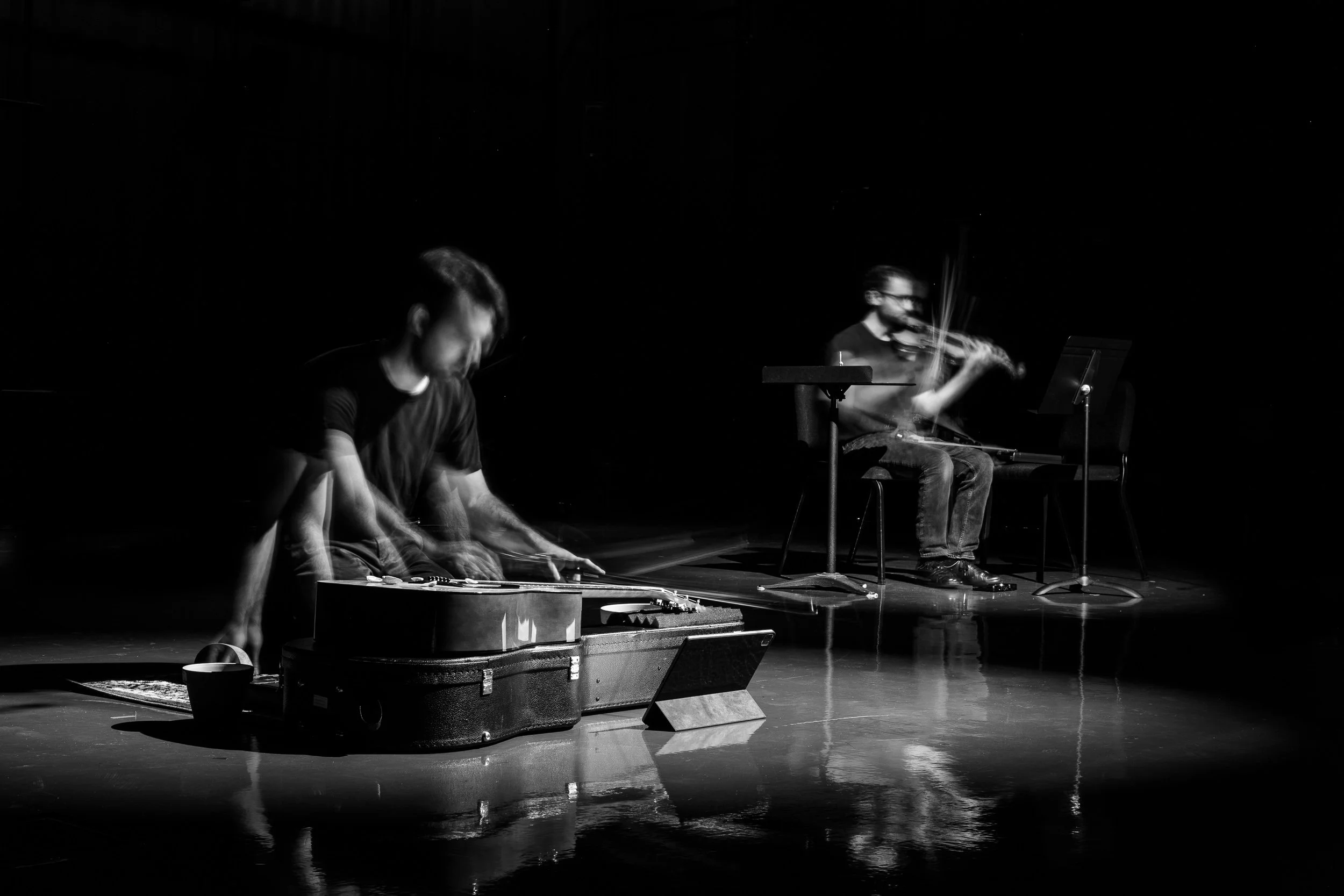
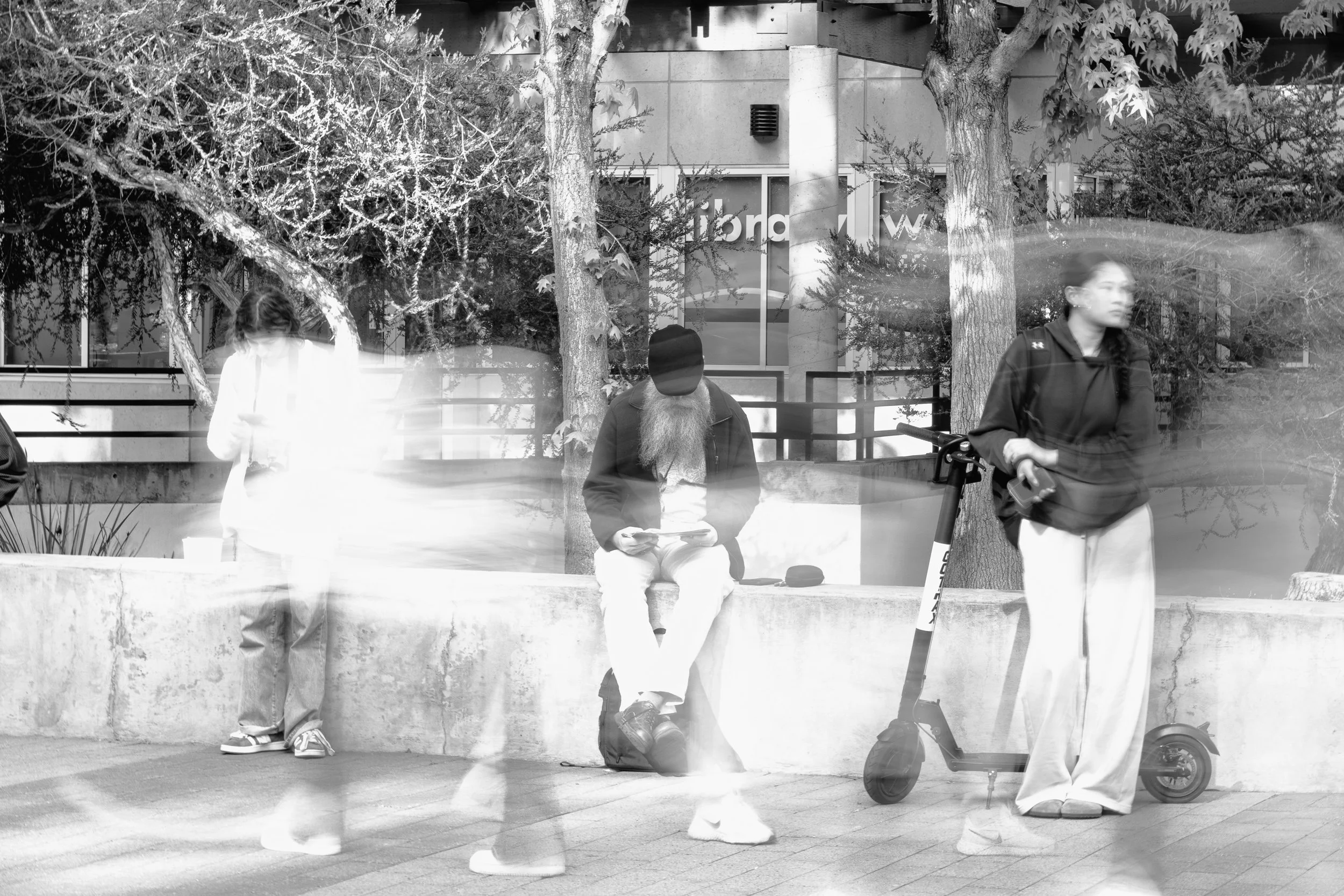
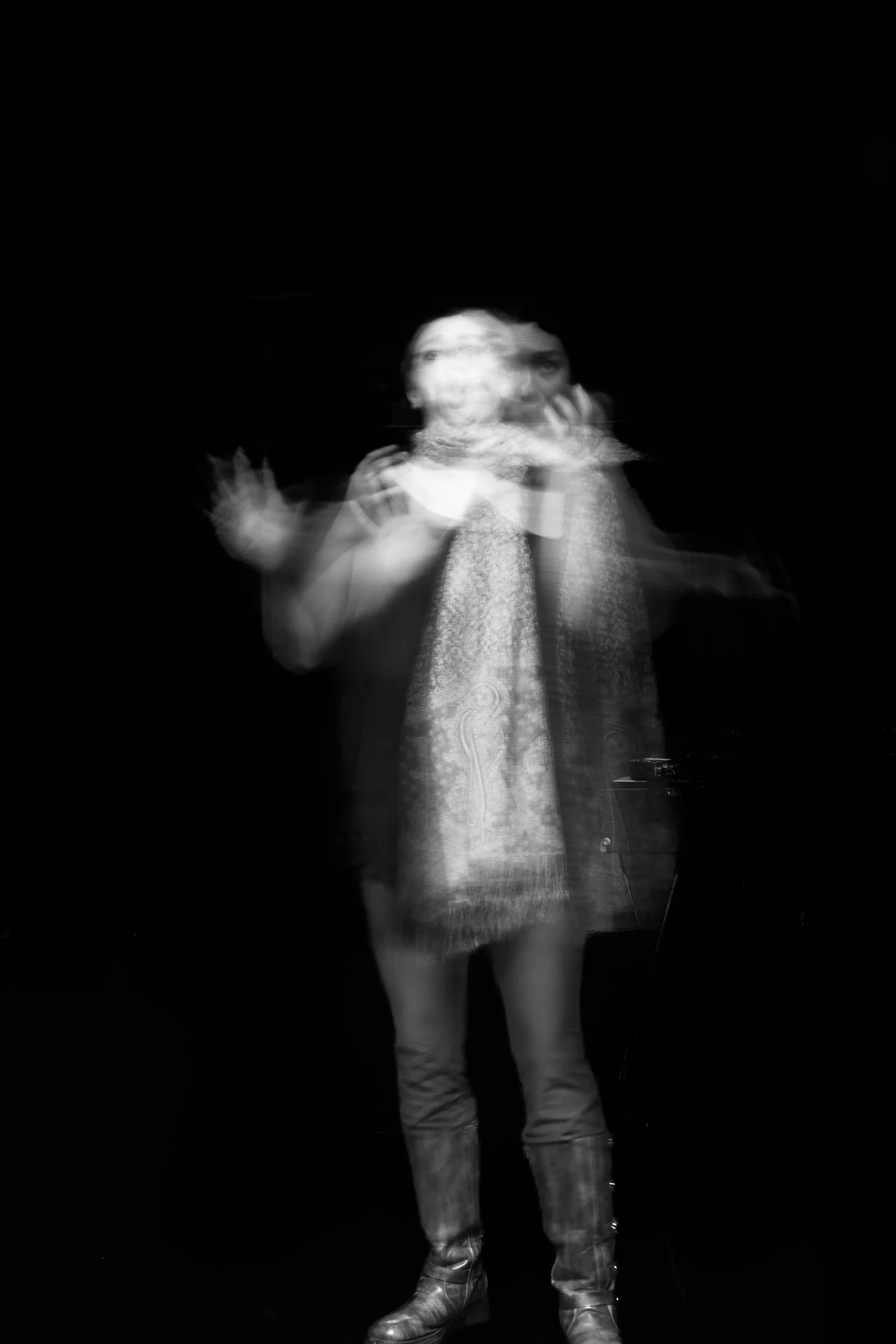
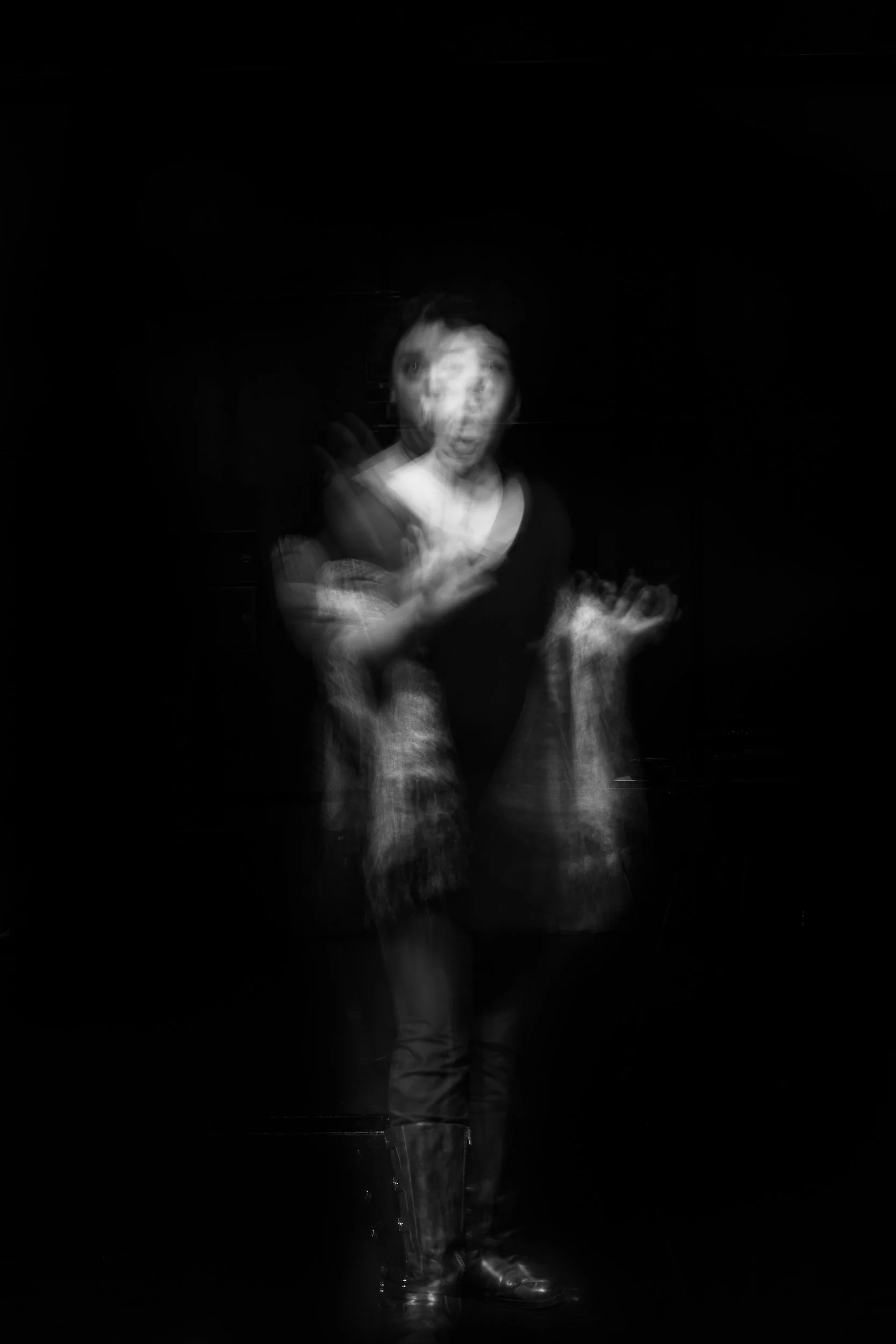
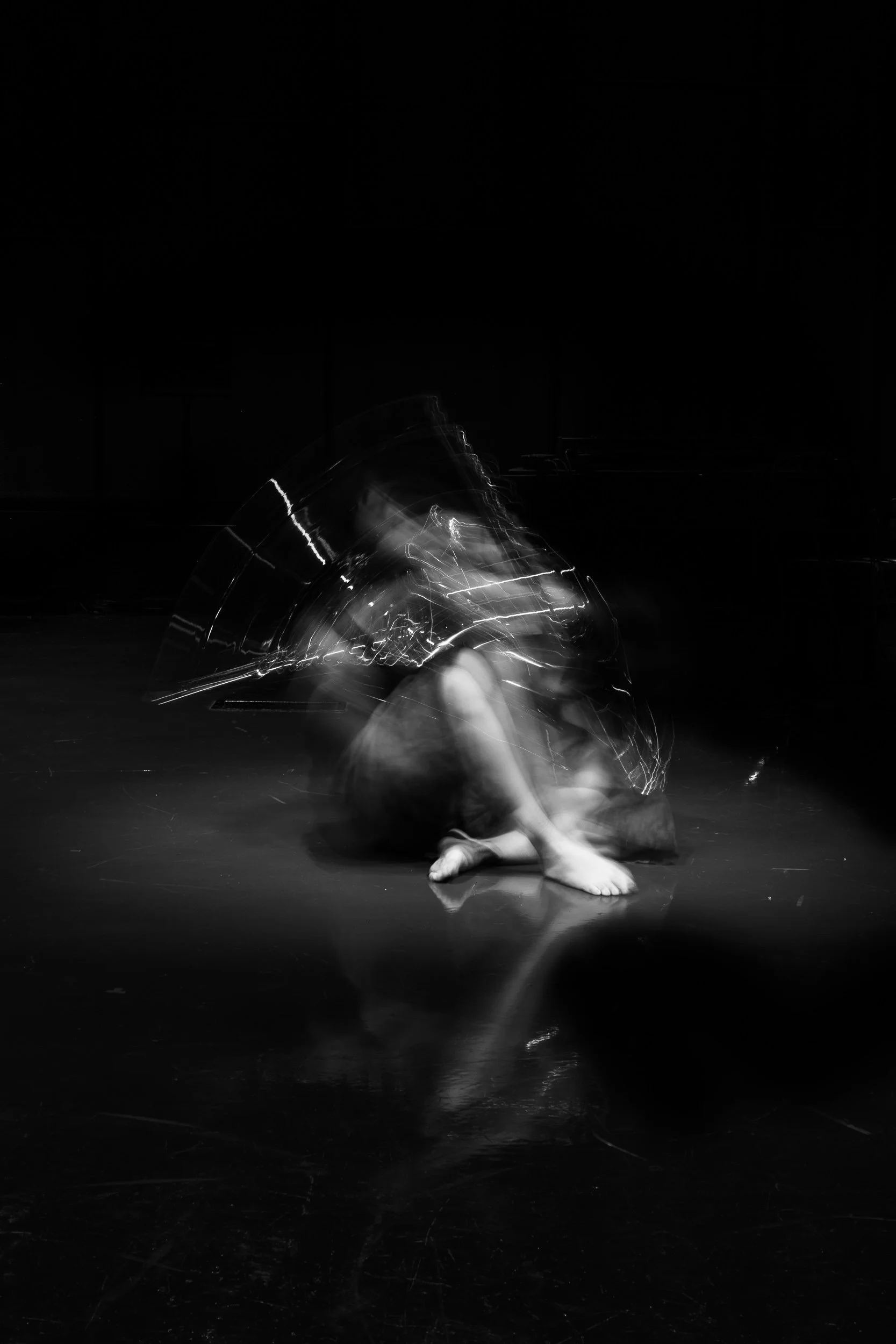
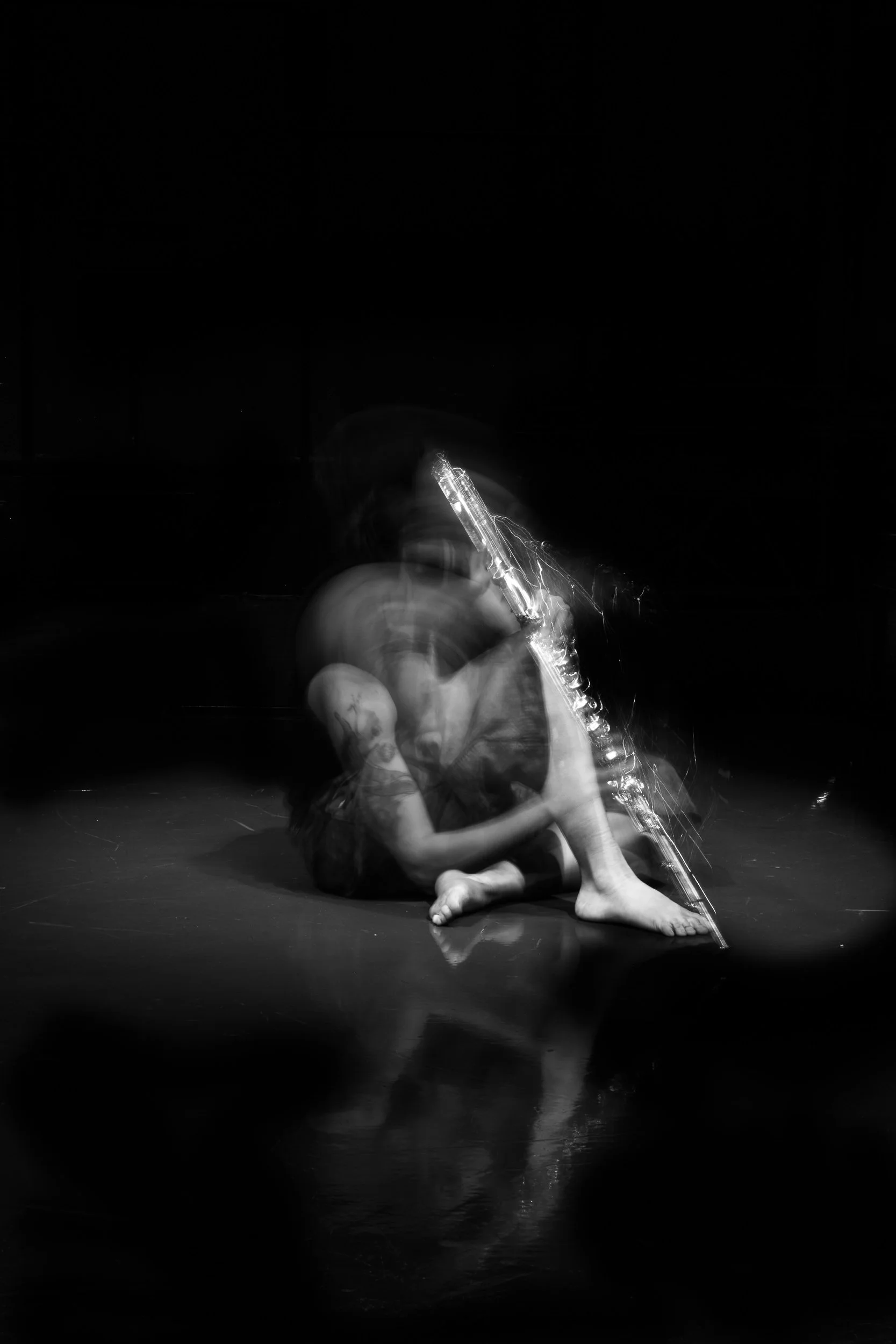
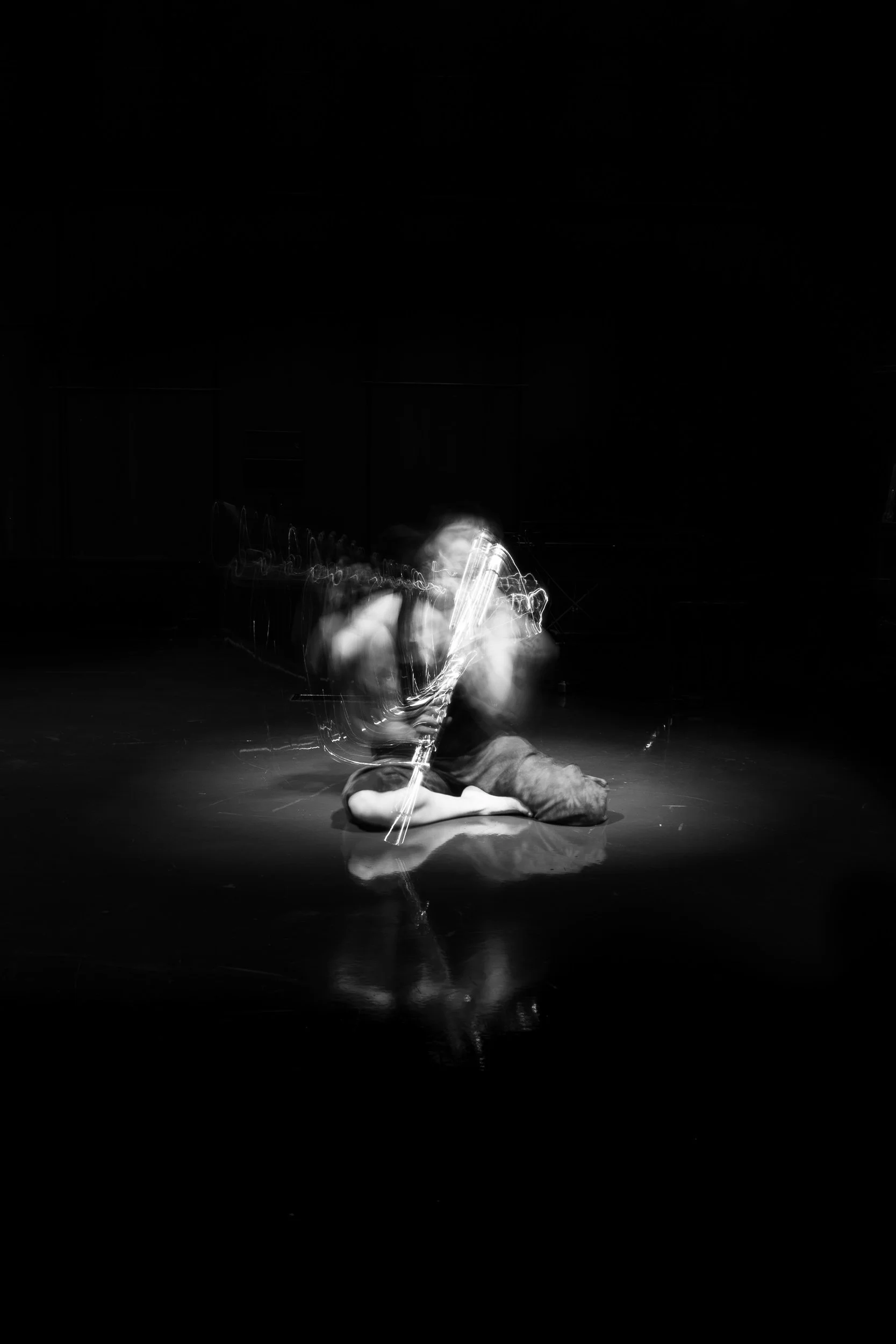
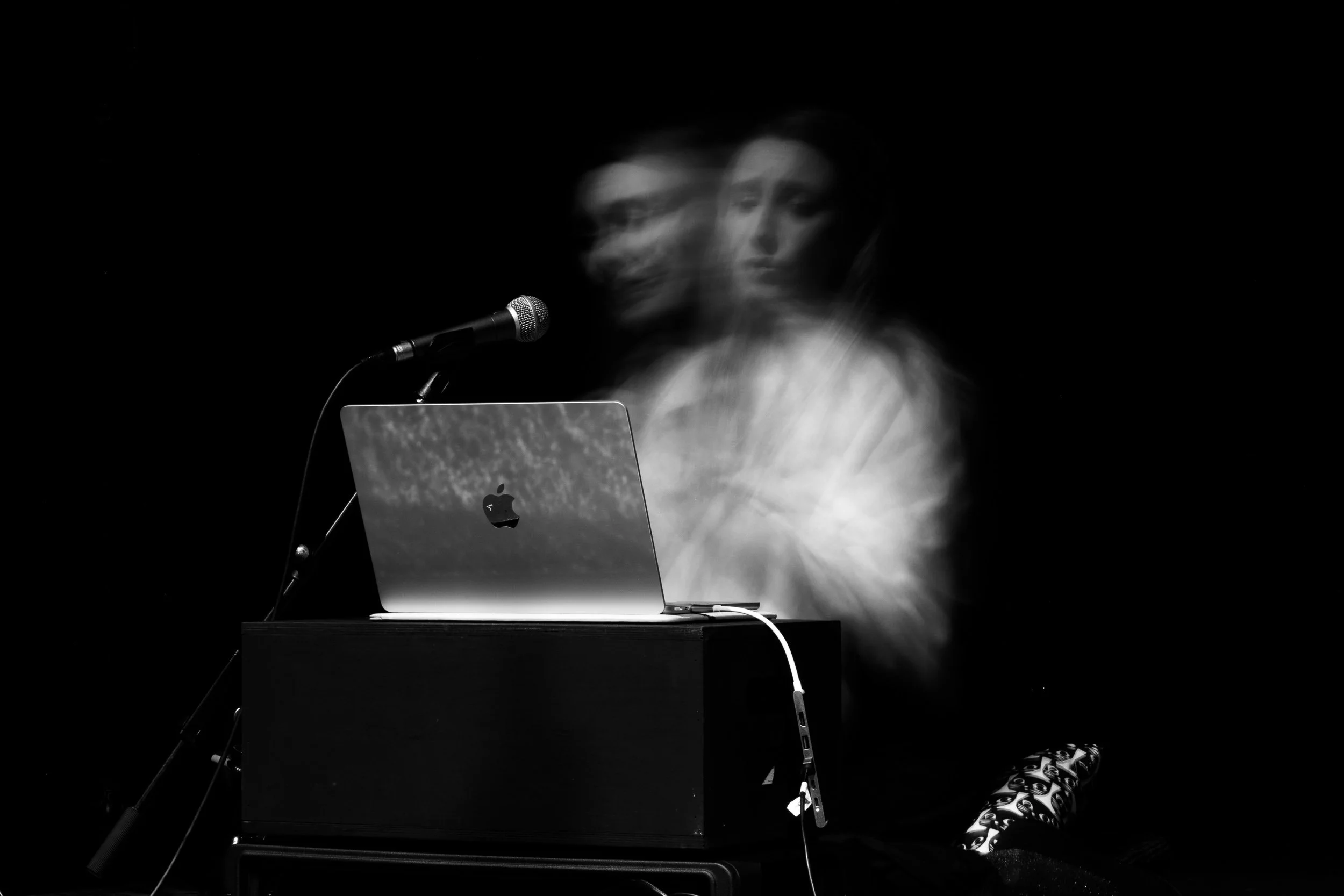
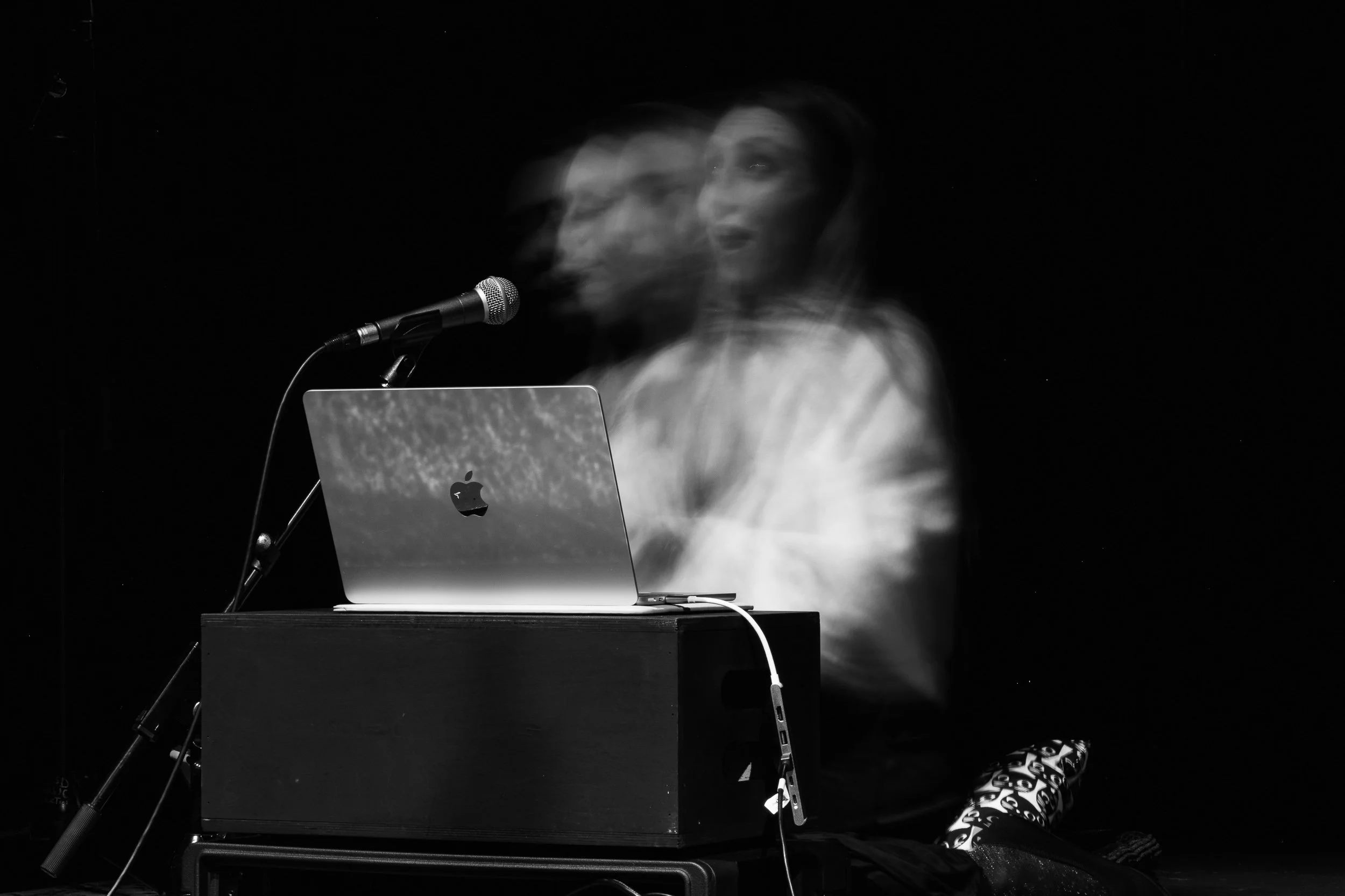
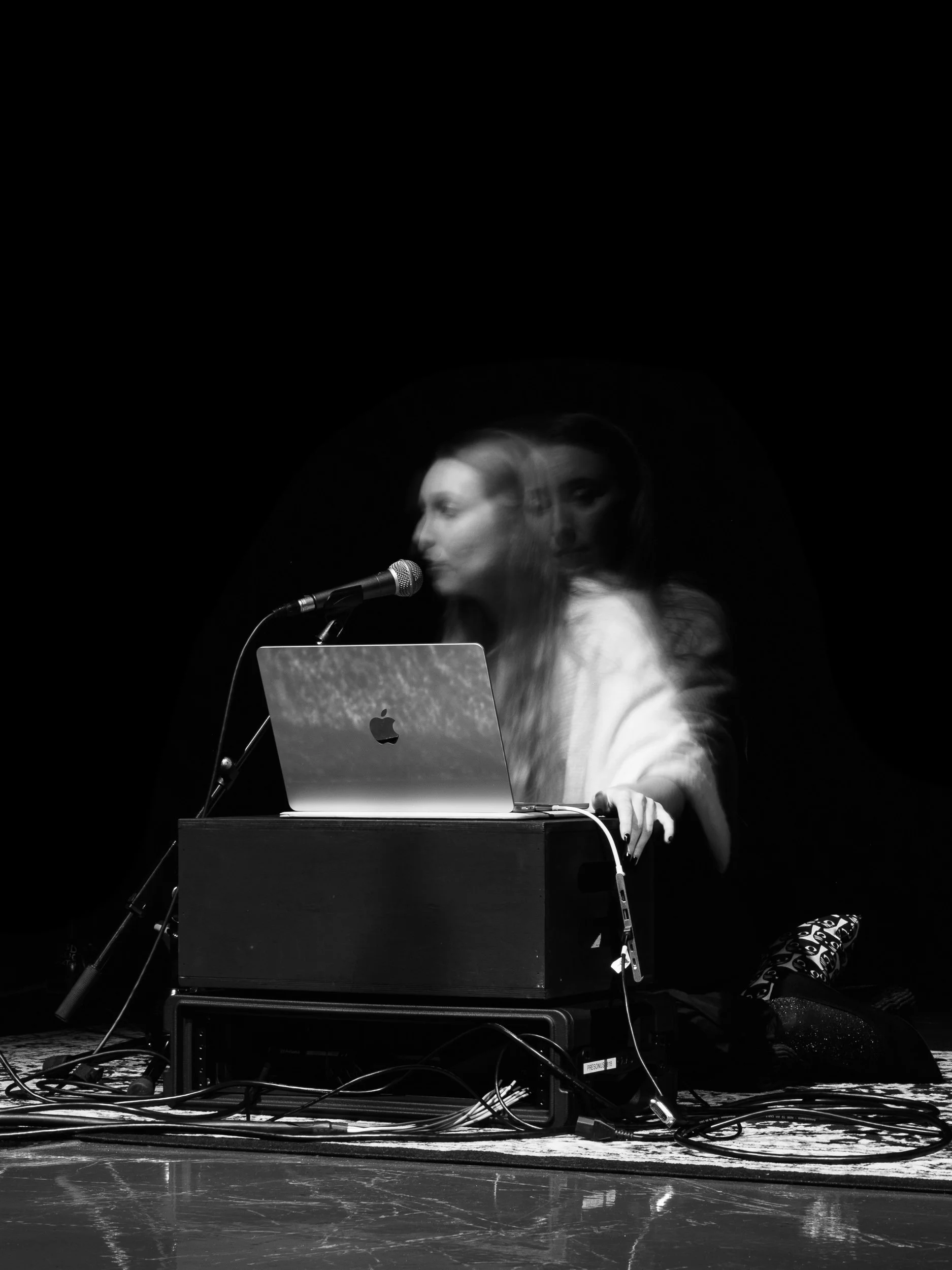
Capturing performance through the lens of temporal fragmentation. Ongoing documentation of live sound and movement using experimental photographic techniques.
I am a musician who photographs performances. Not to document them. To transform them.
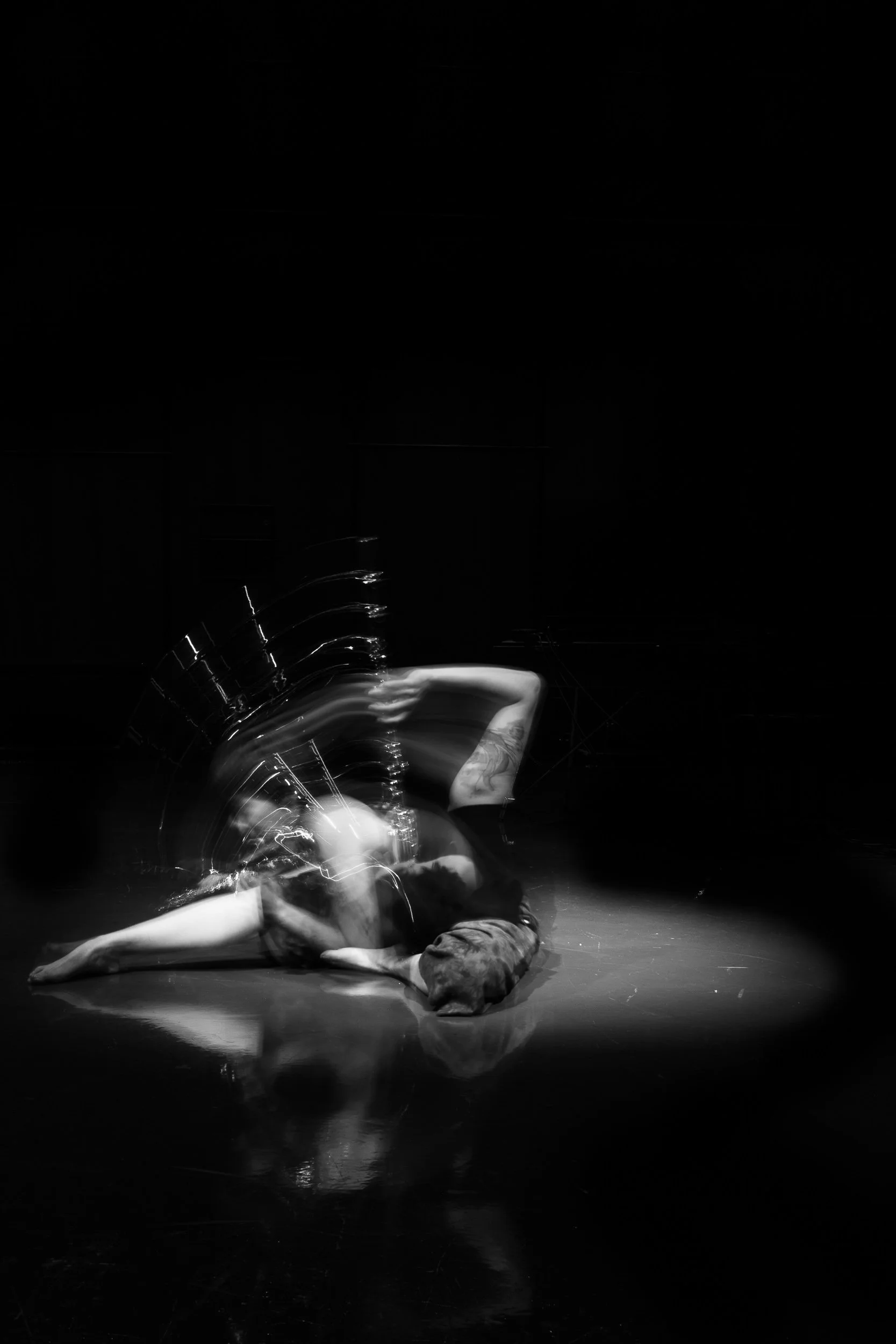
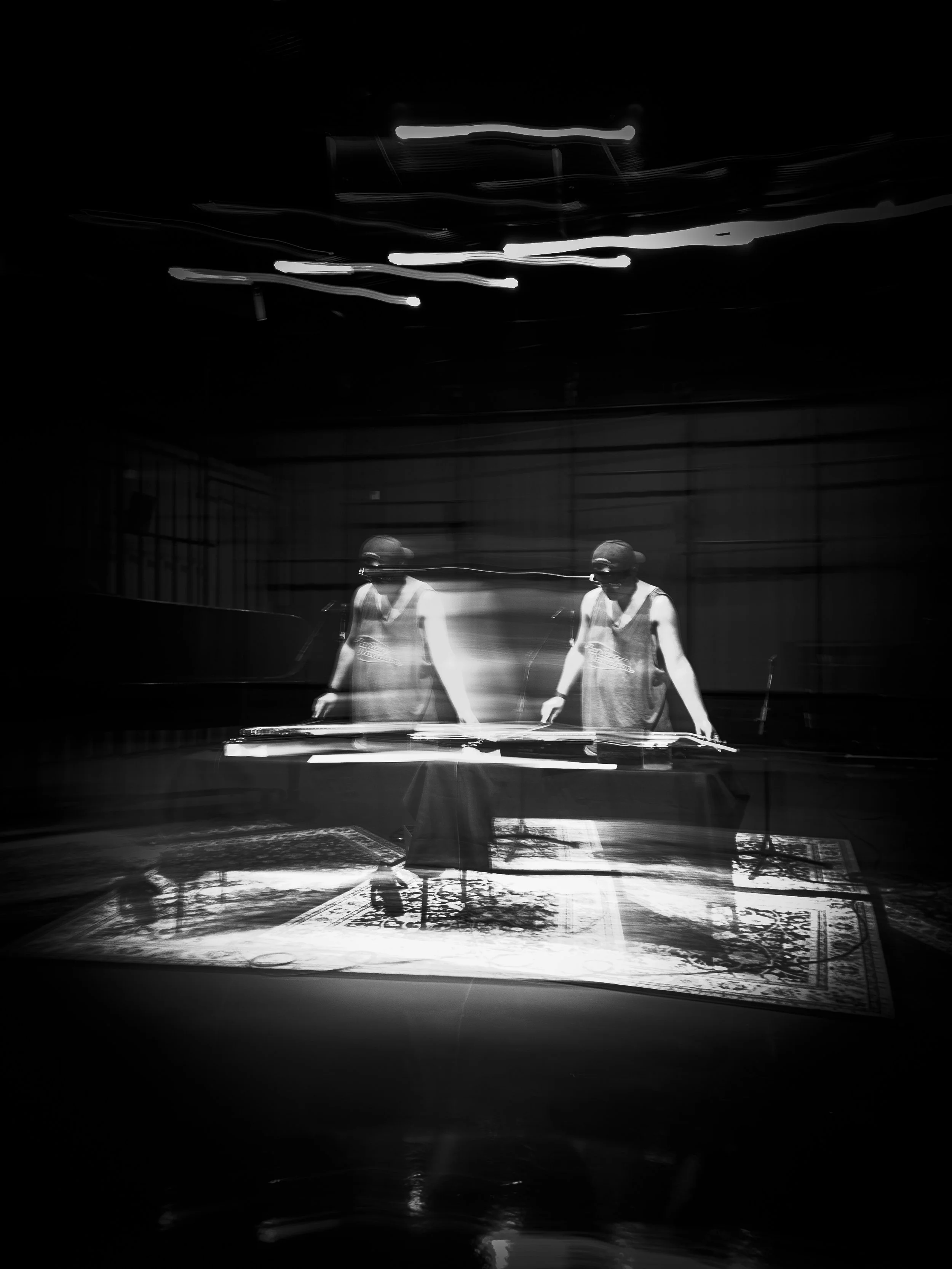
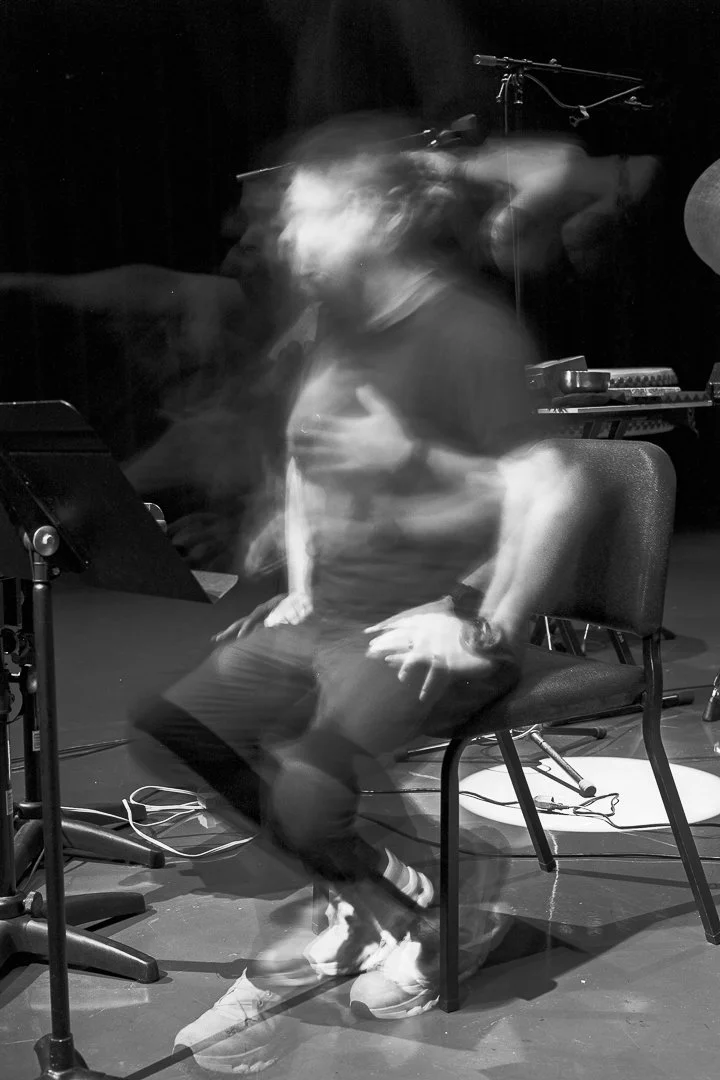
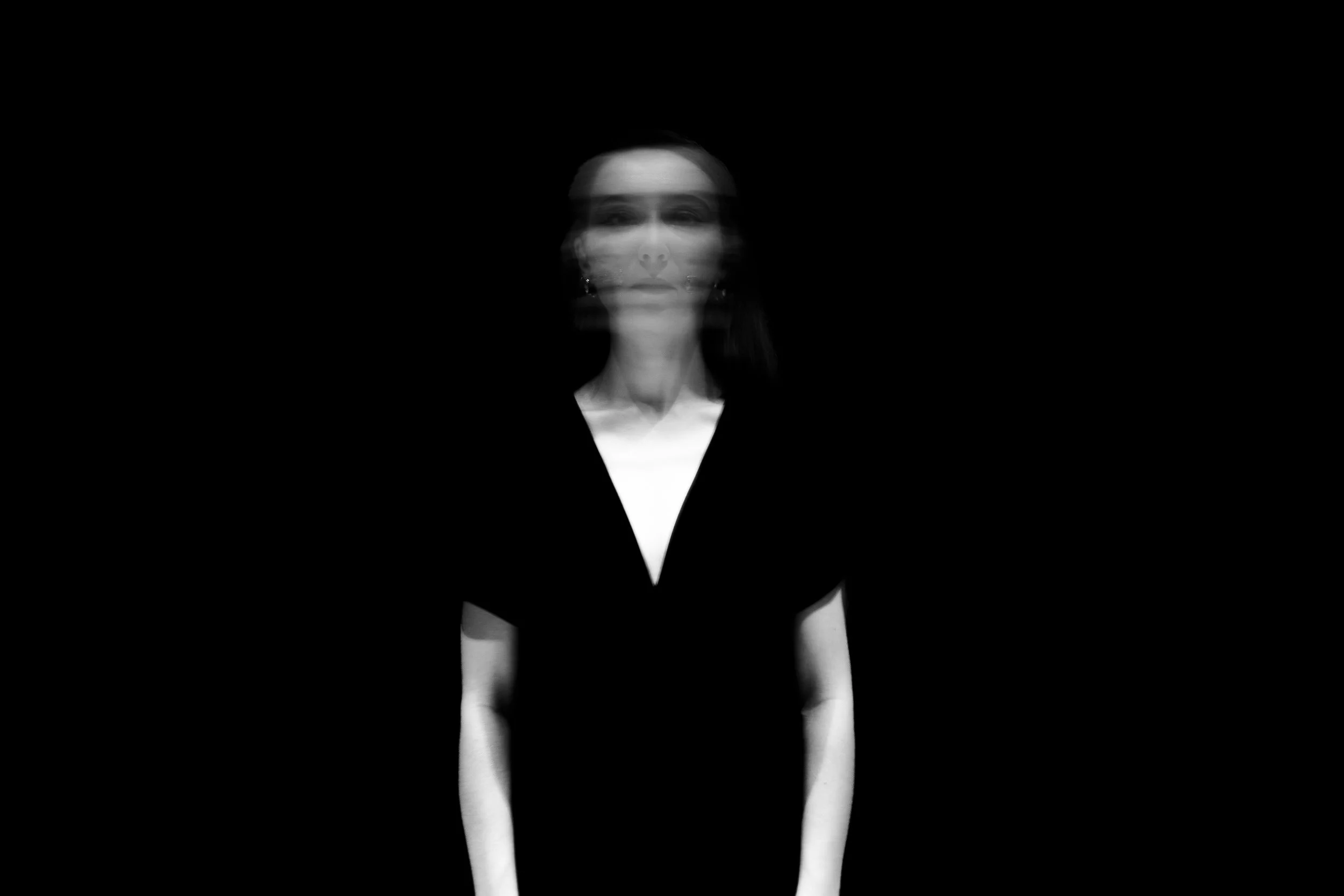
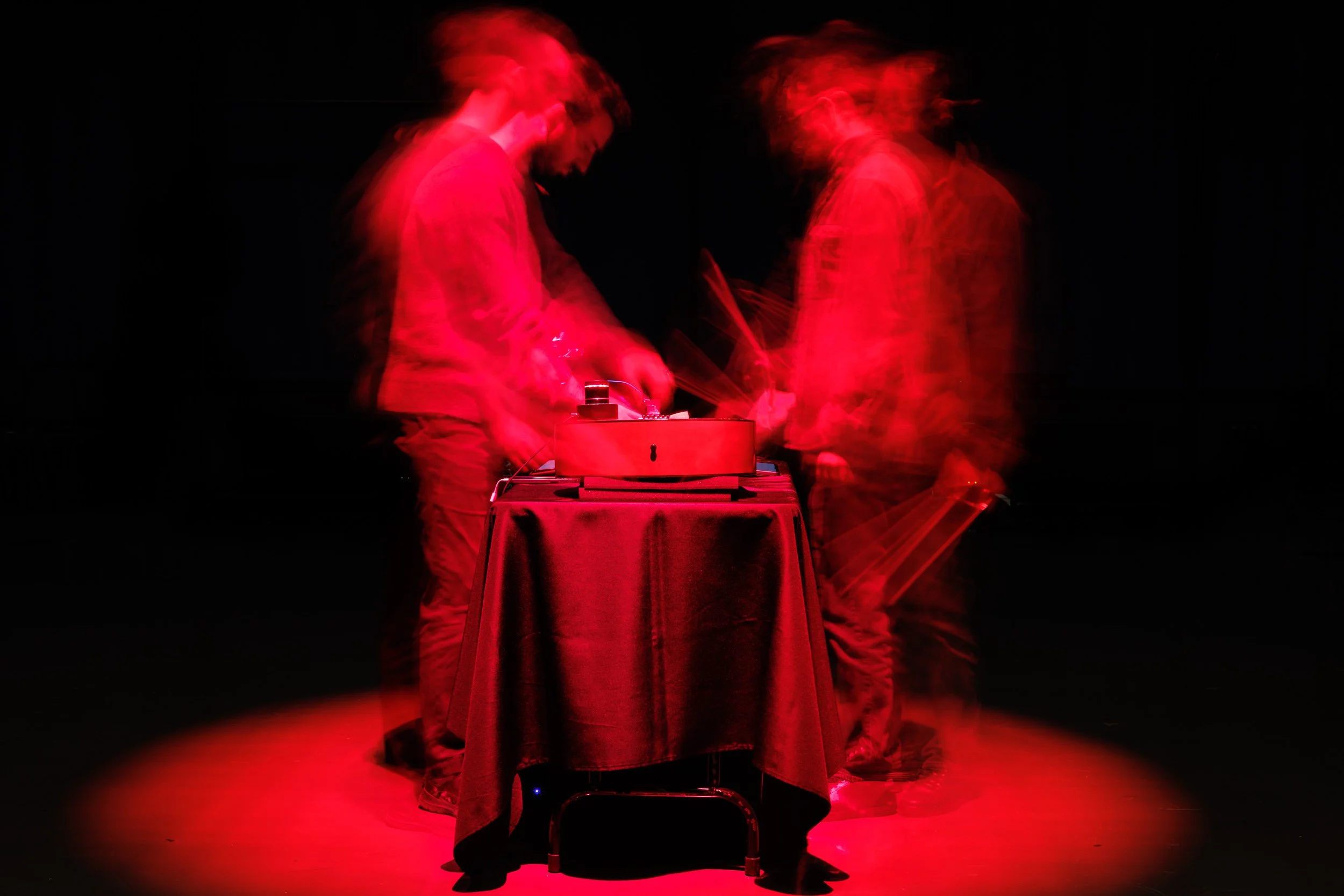
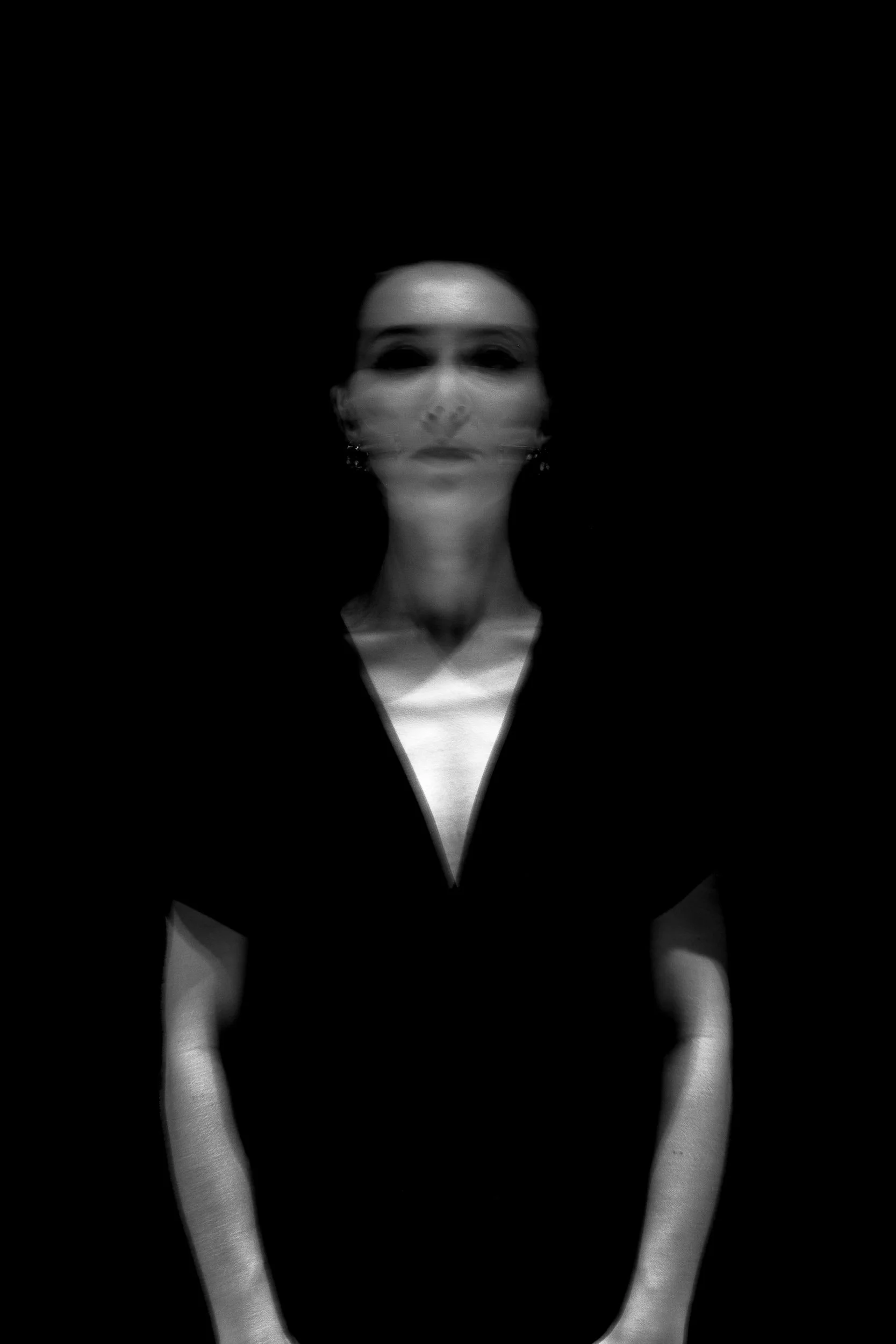
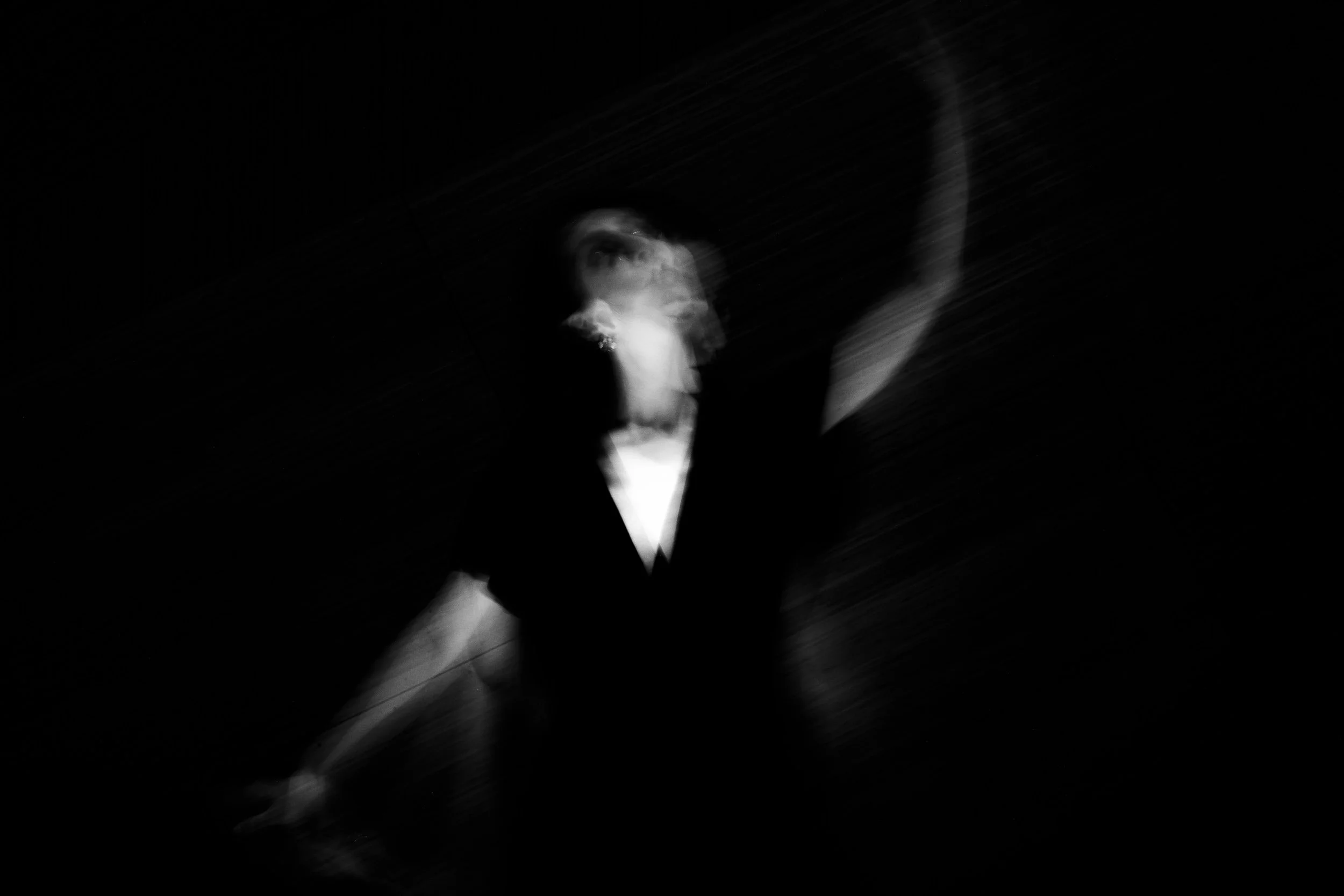
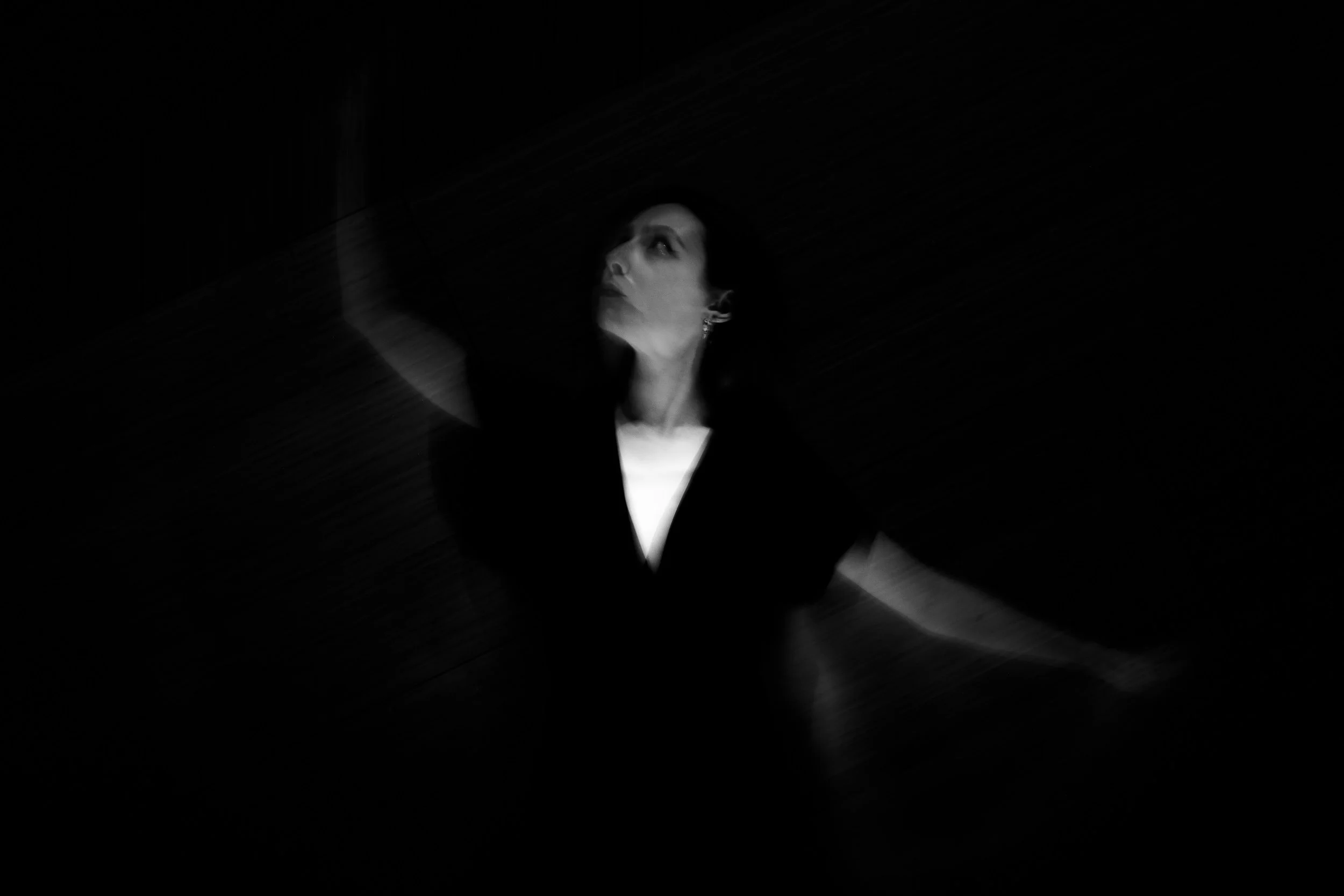
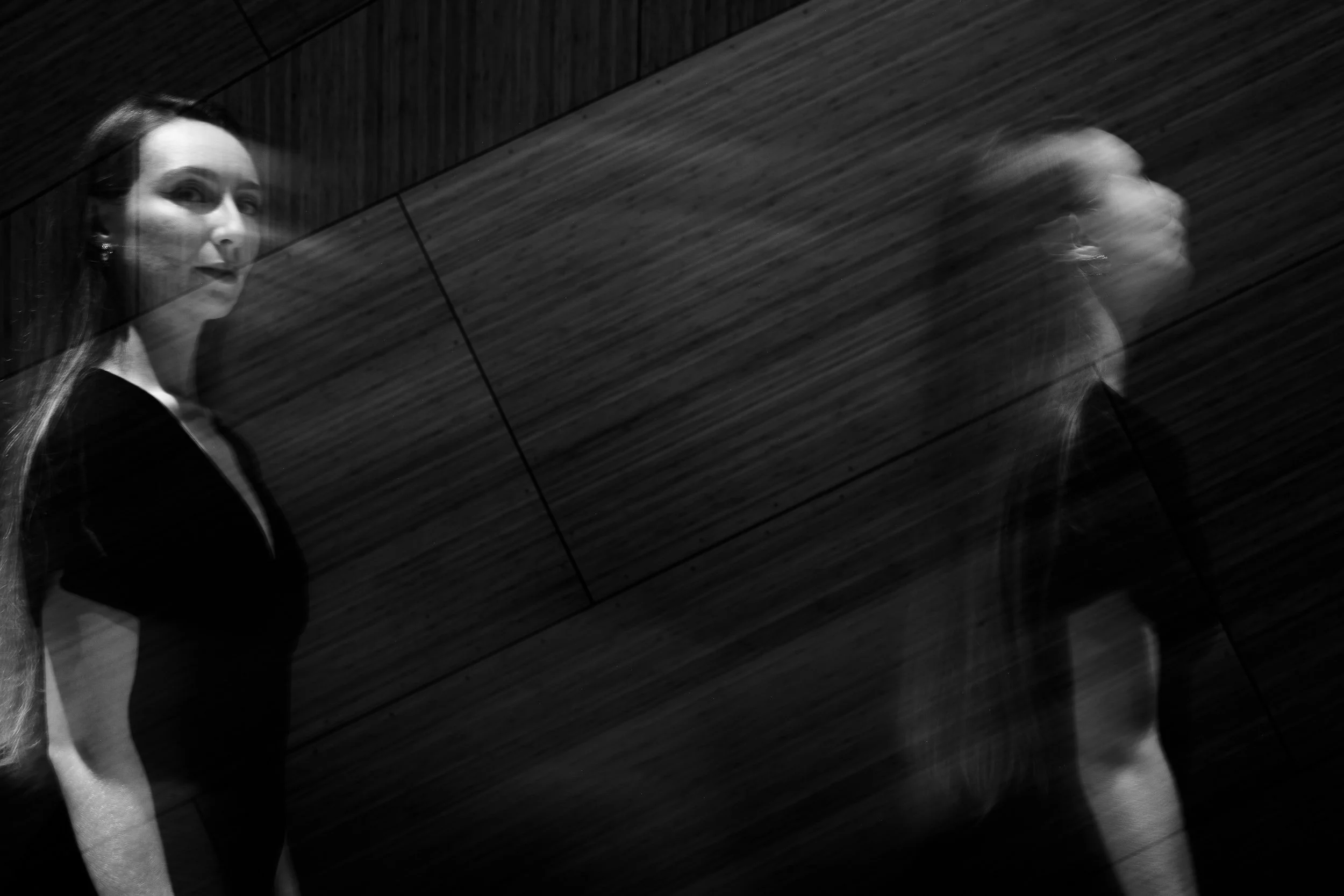
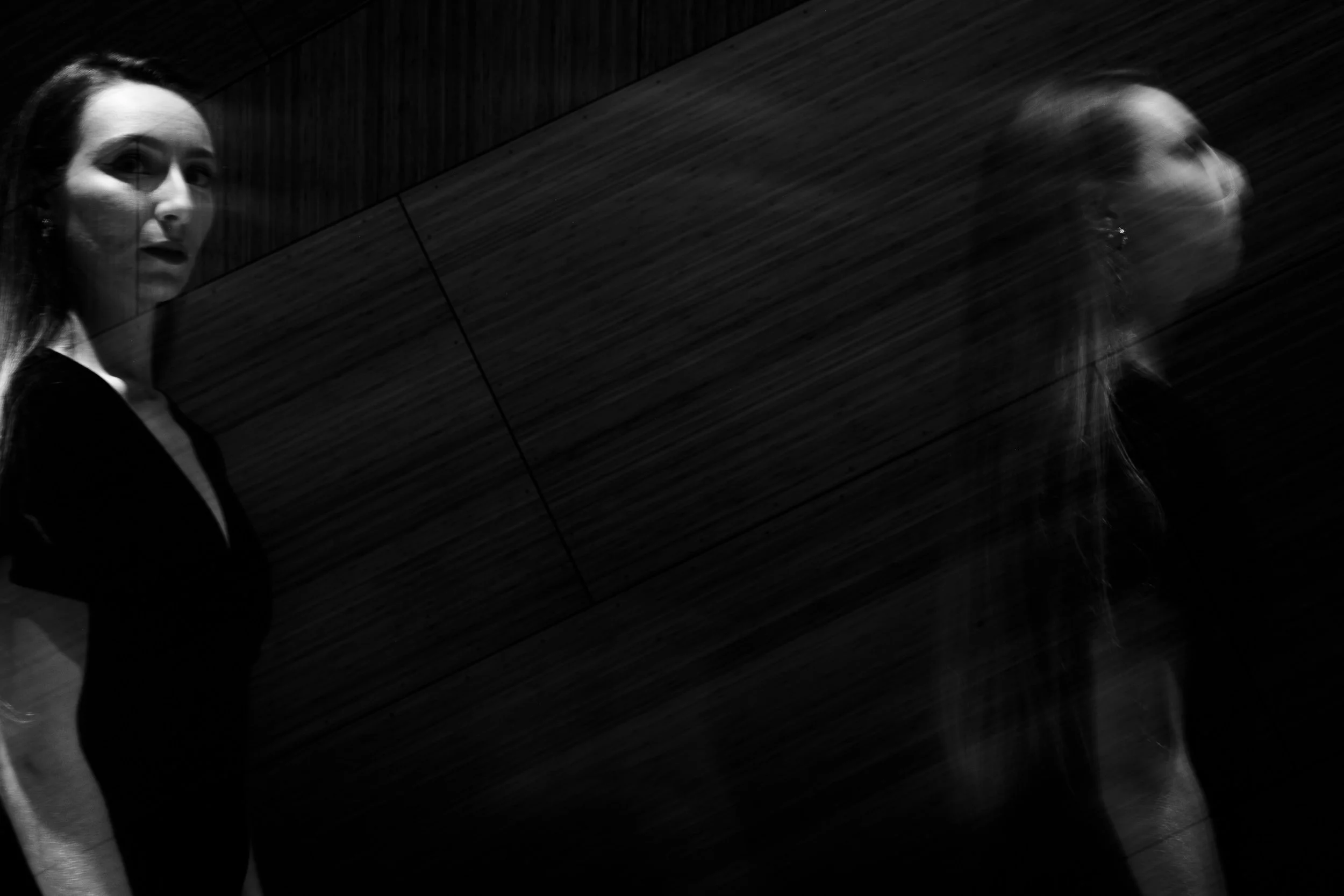
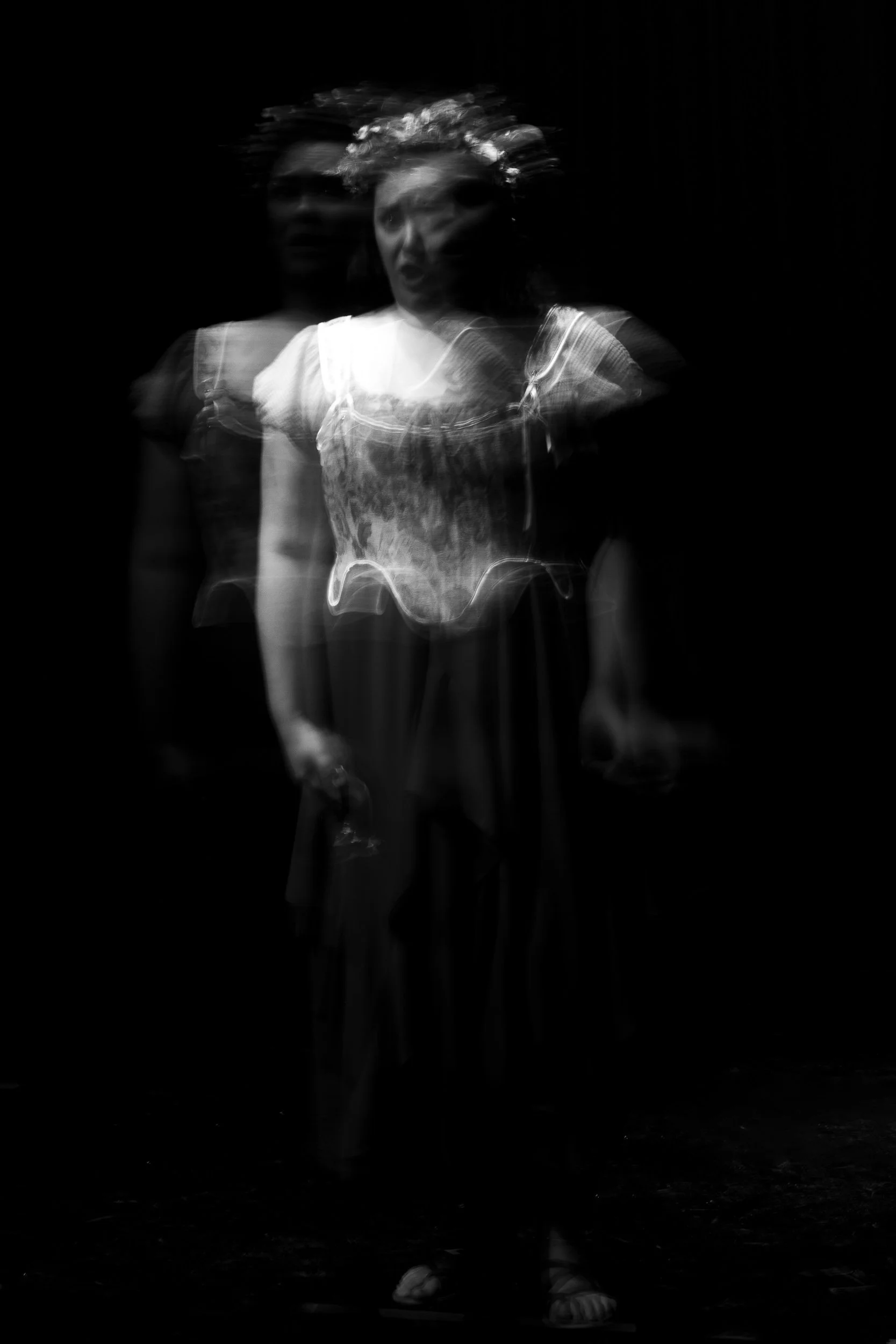
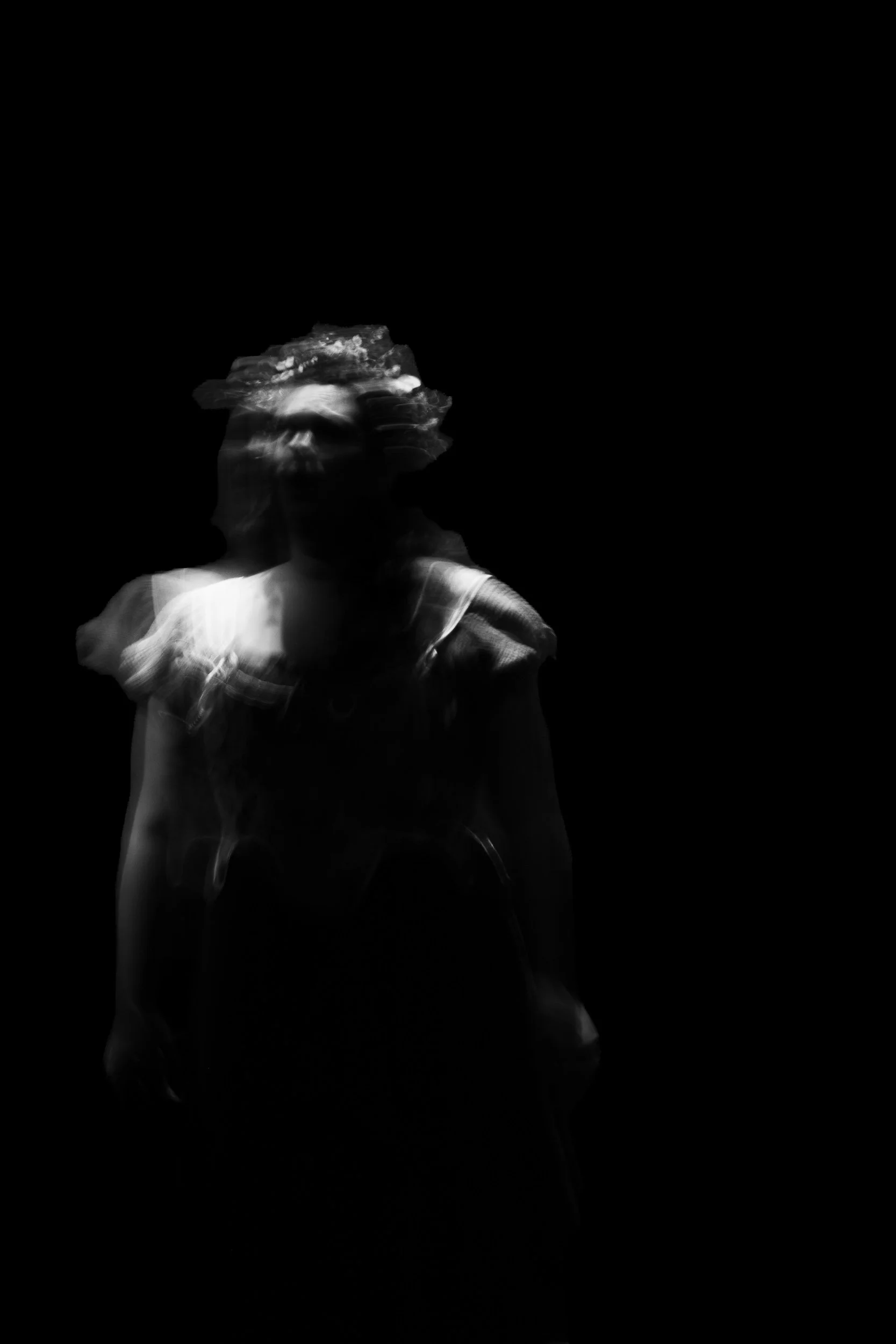
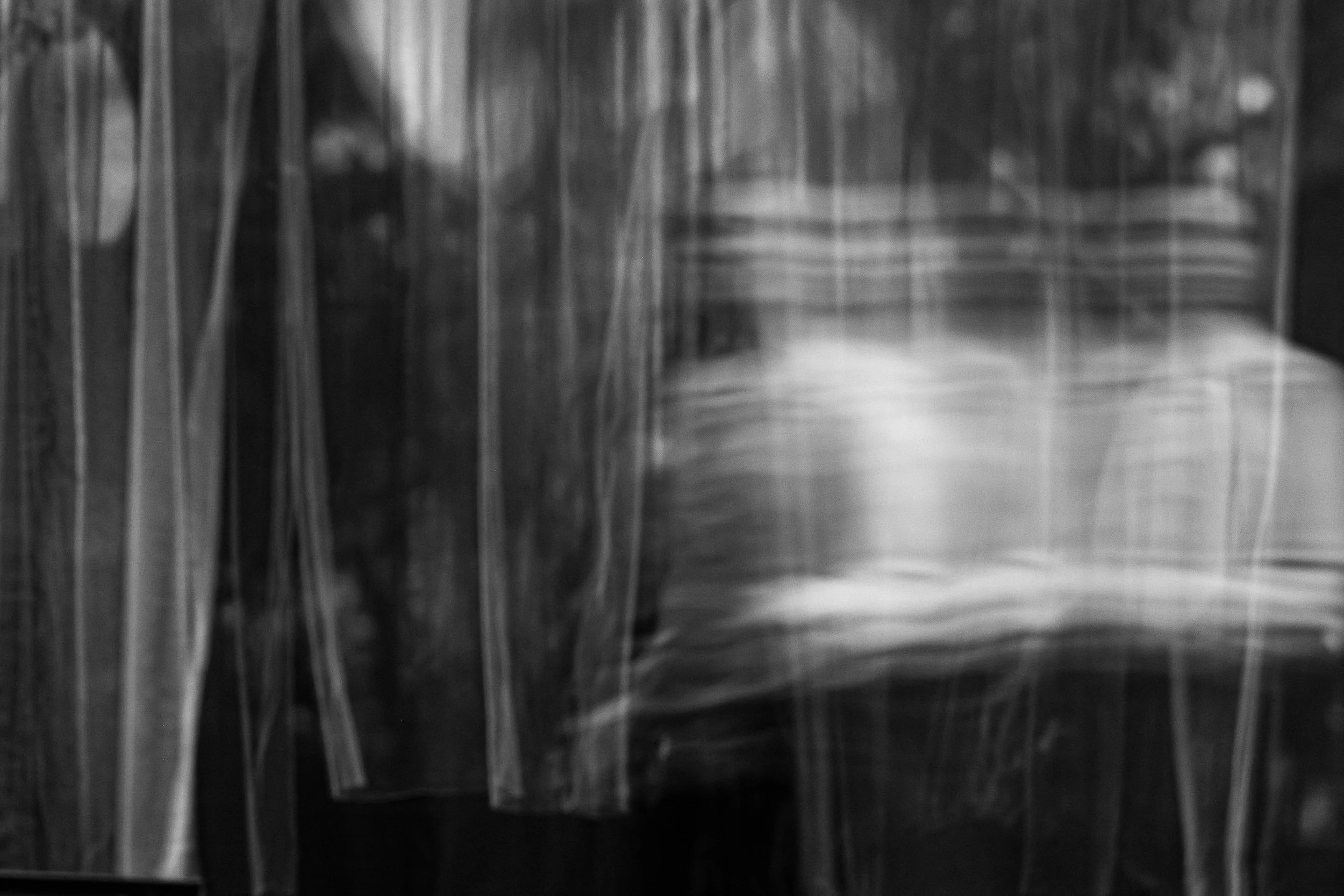
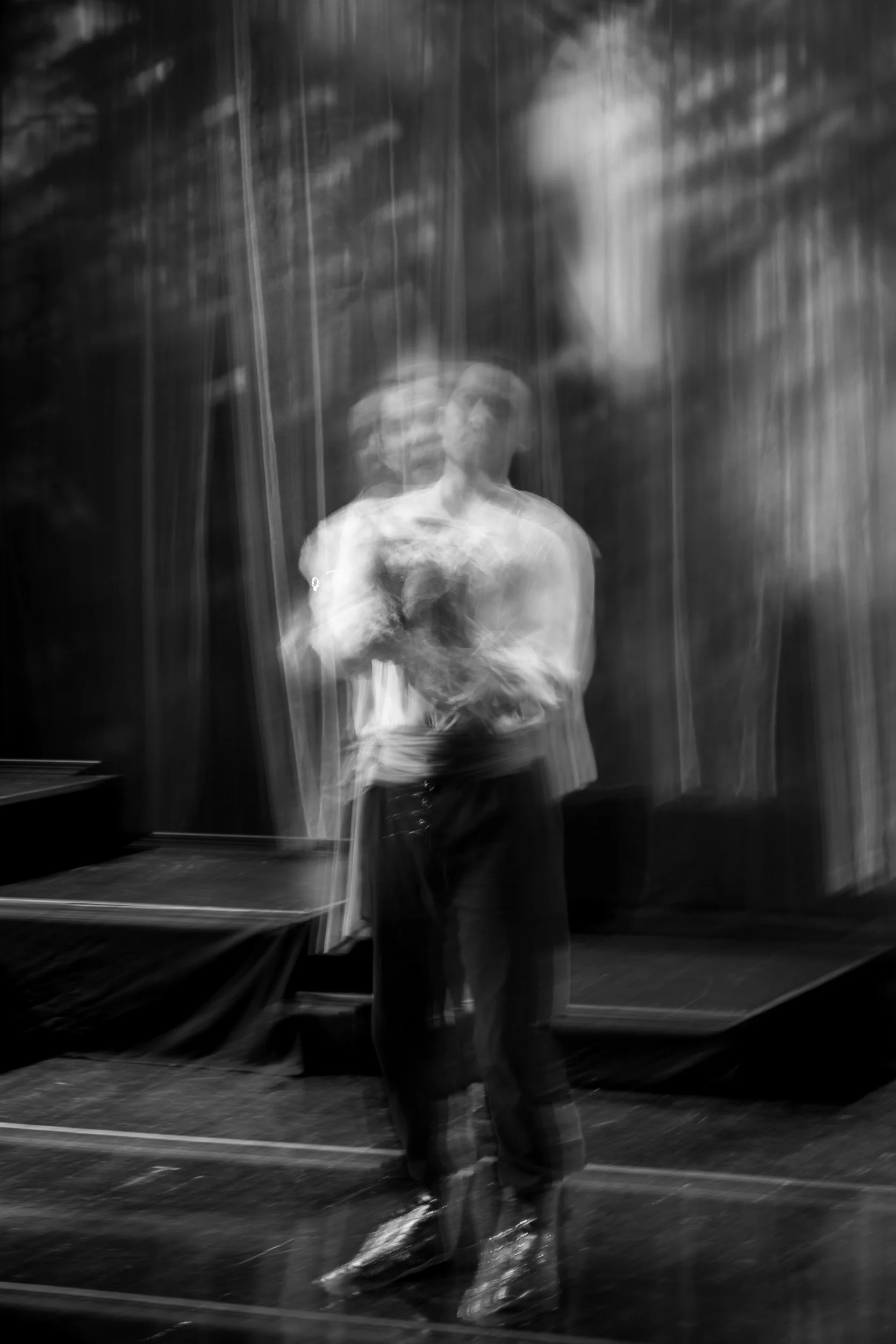
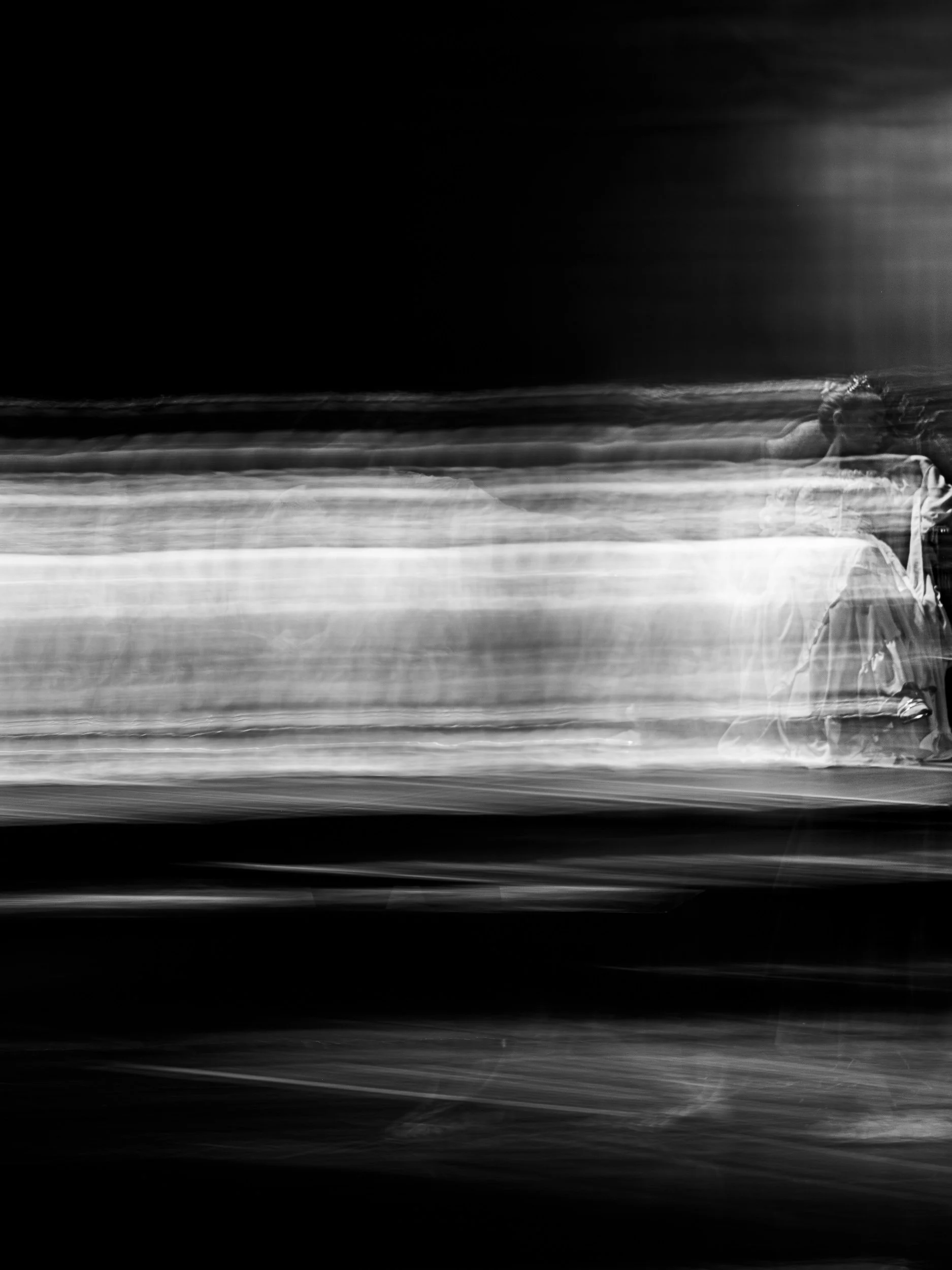
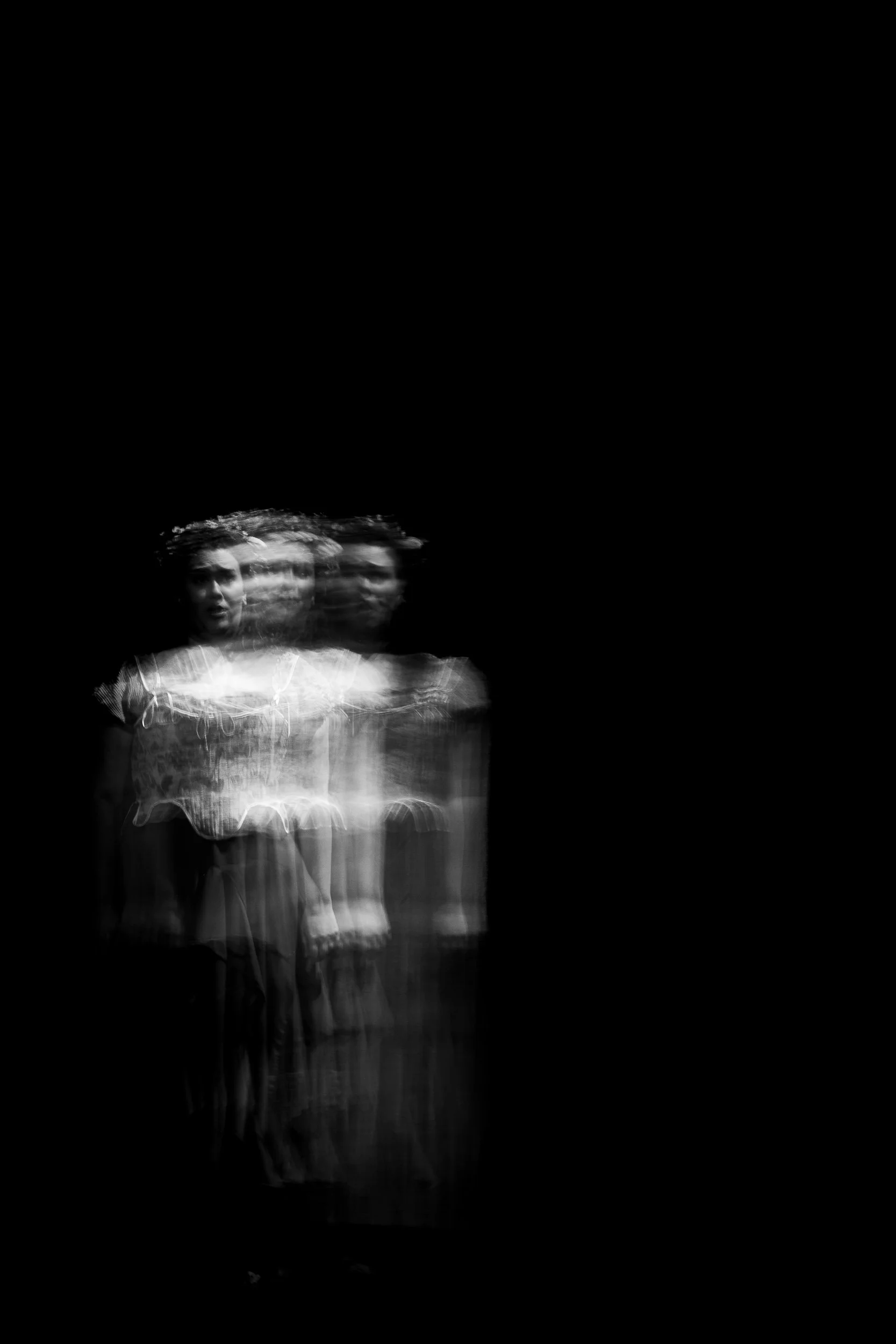
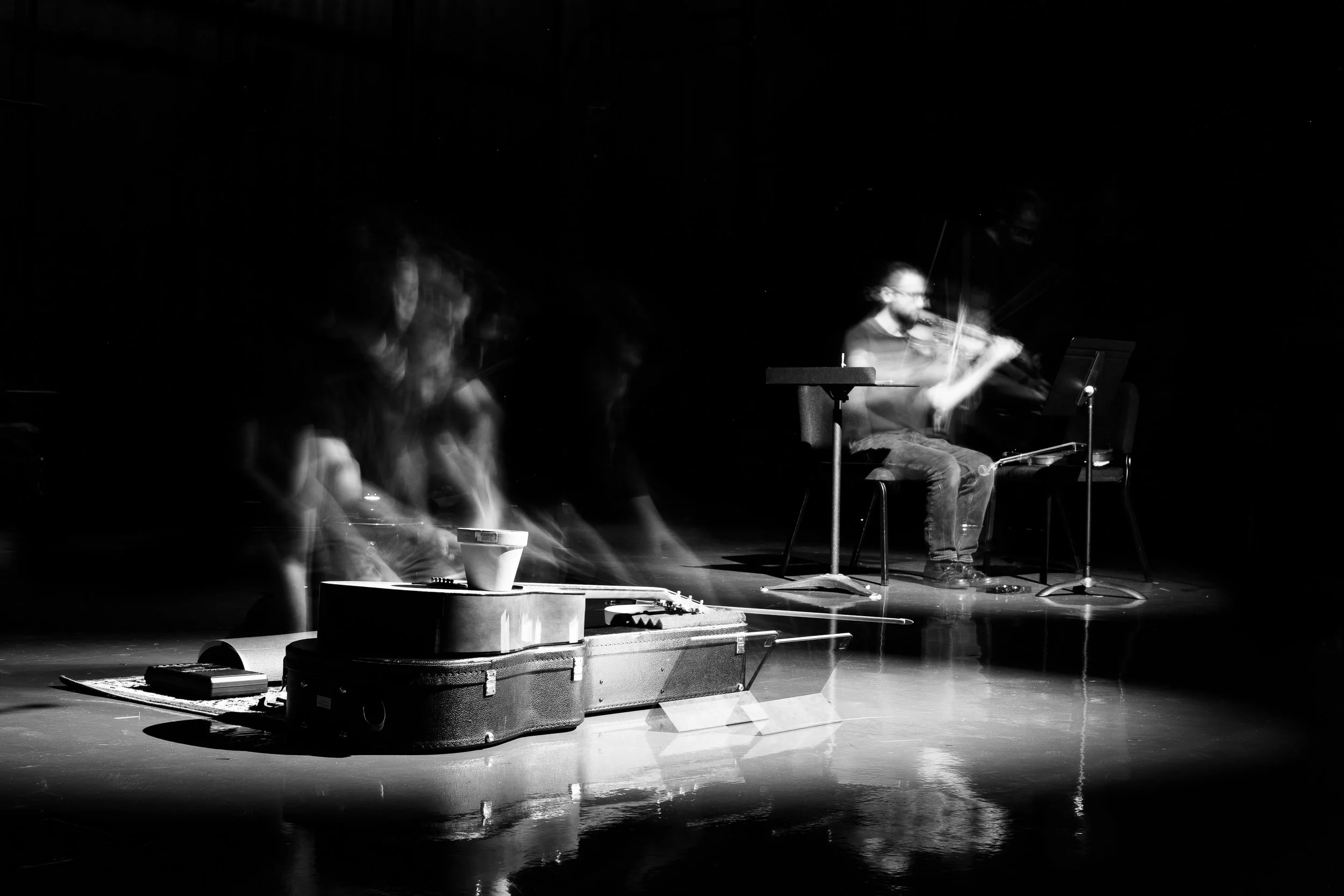
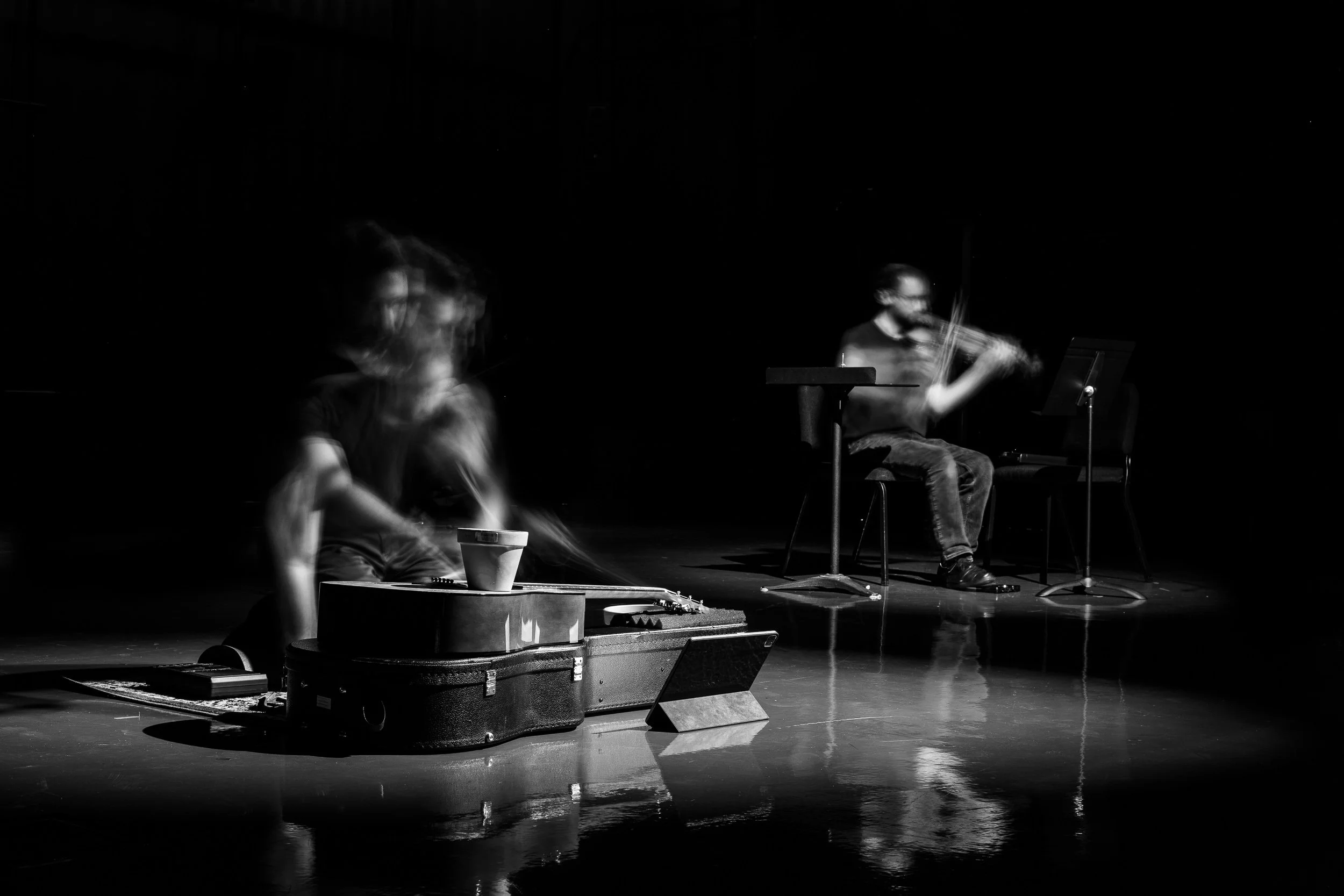
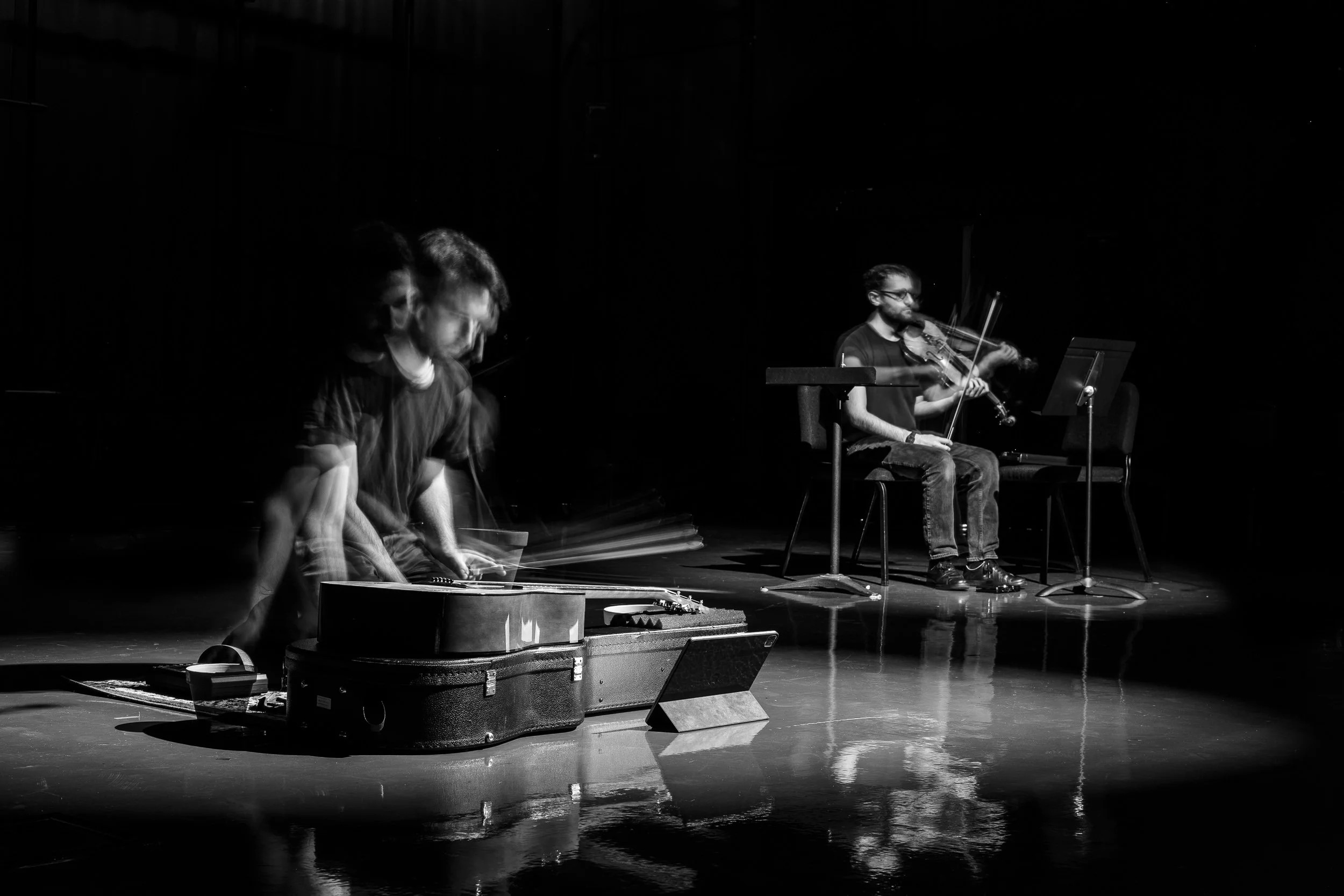
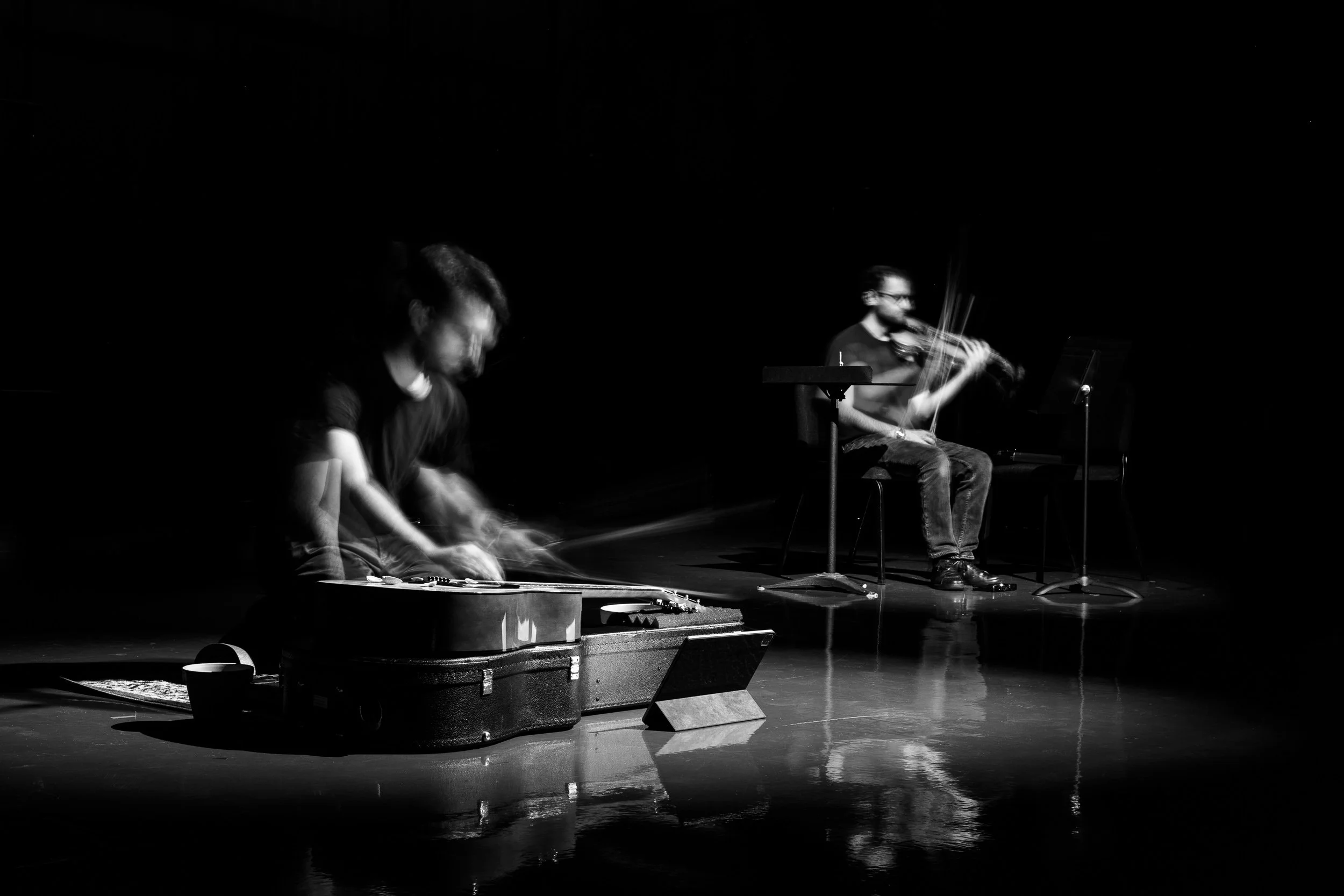
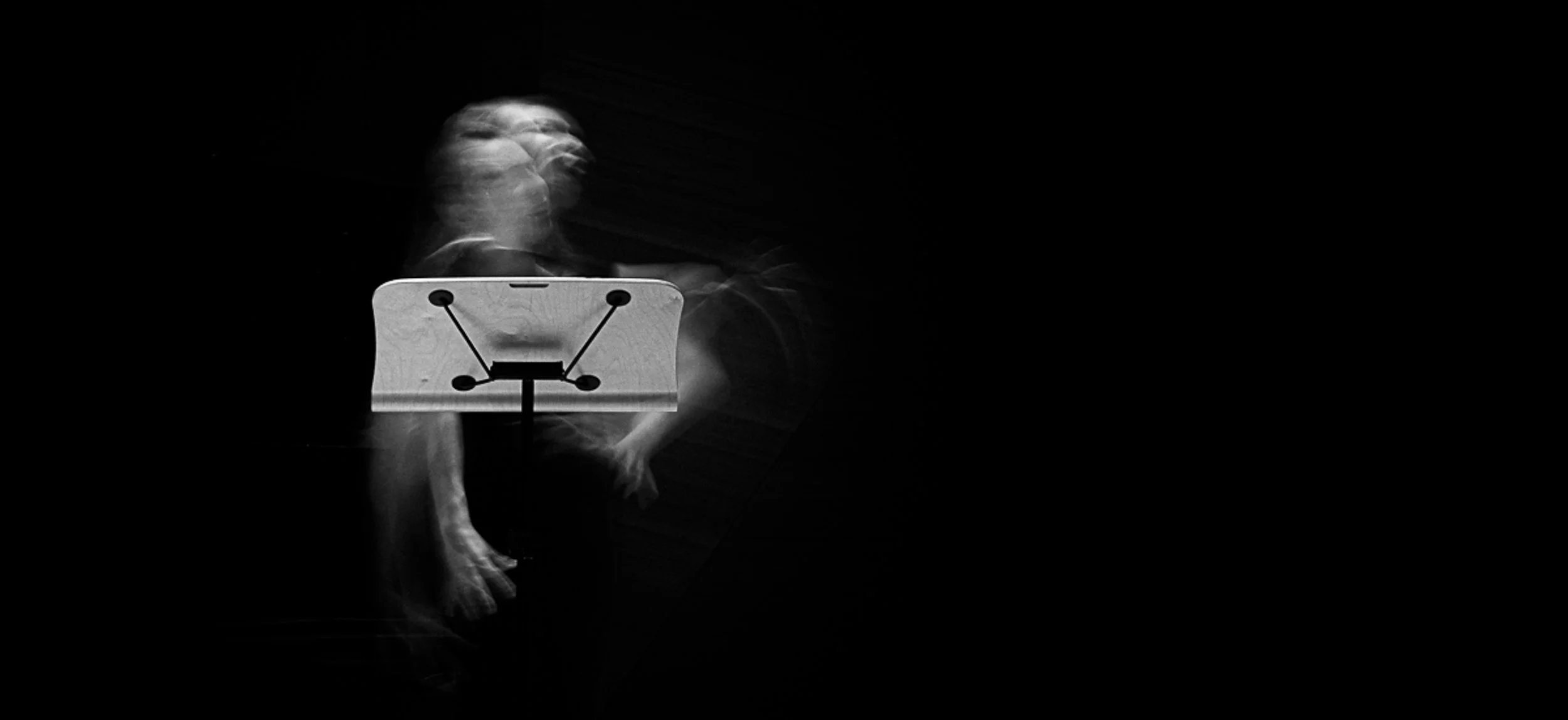
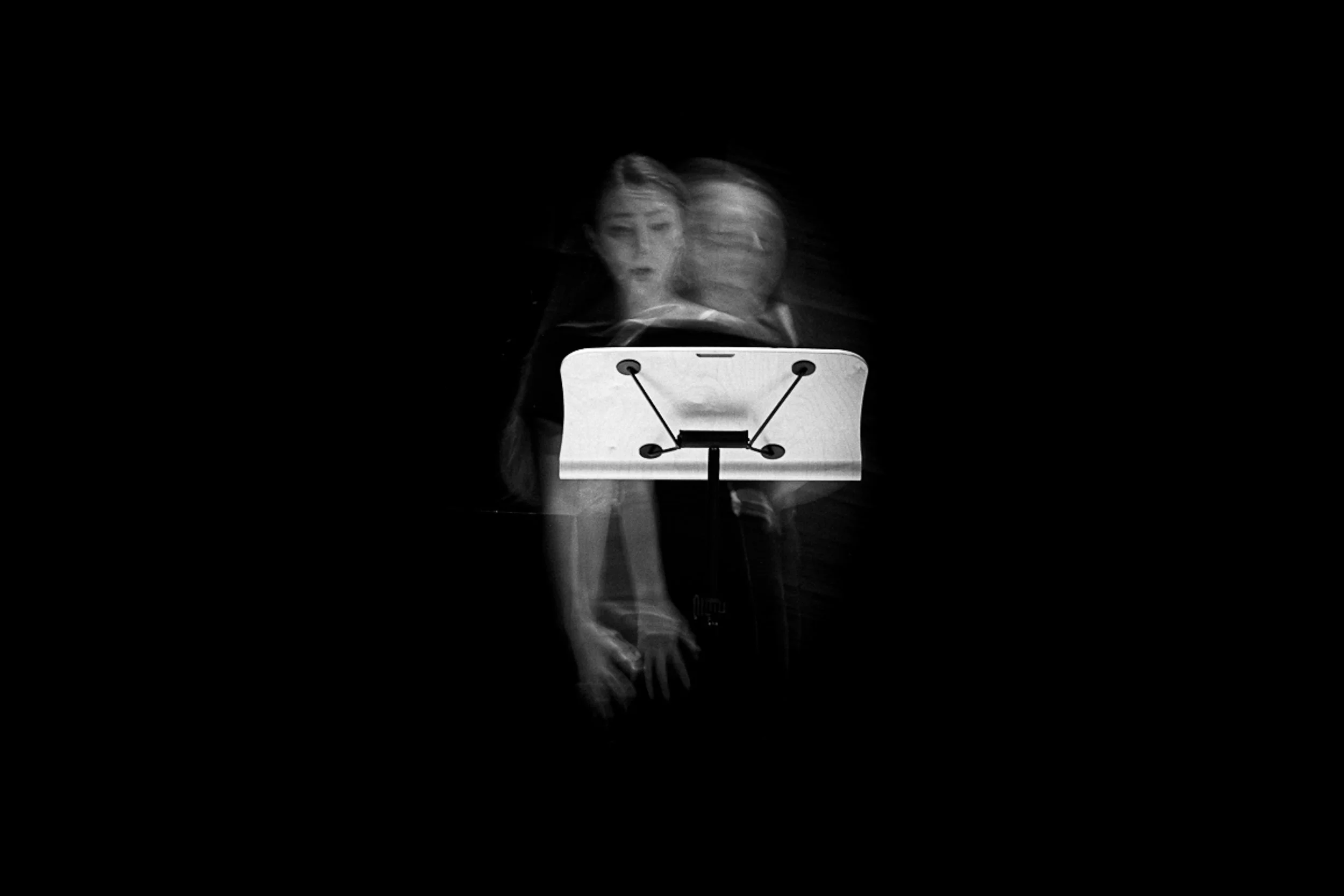
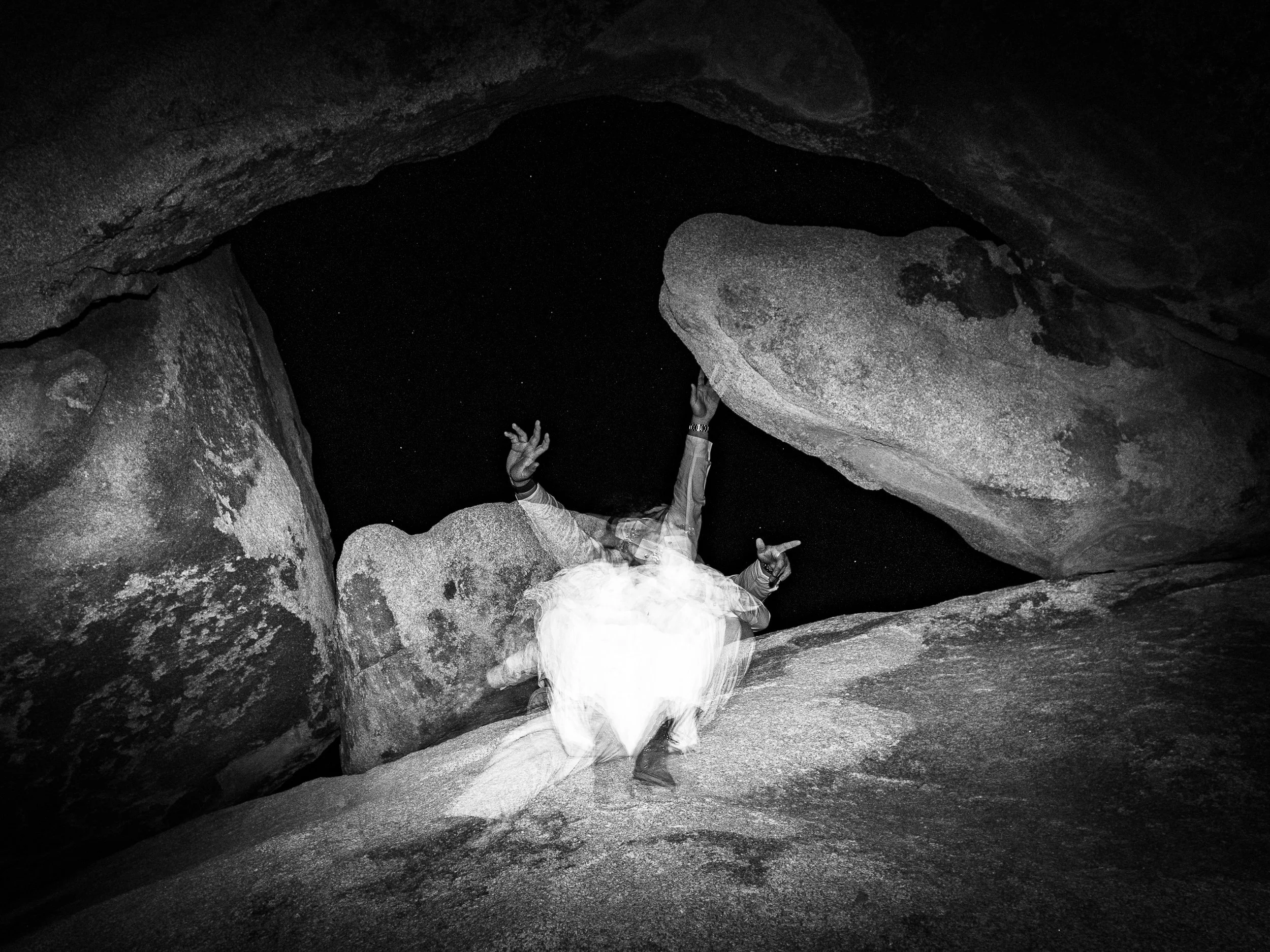
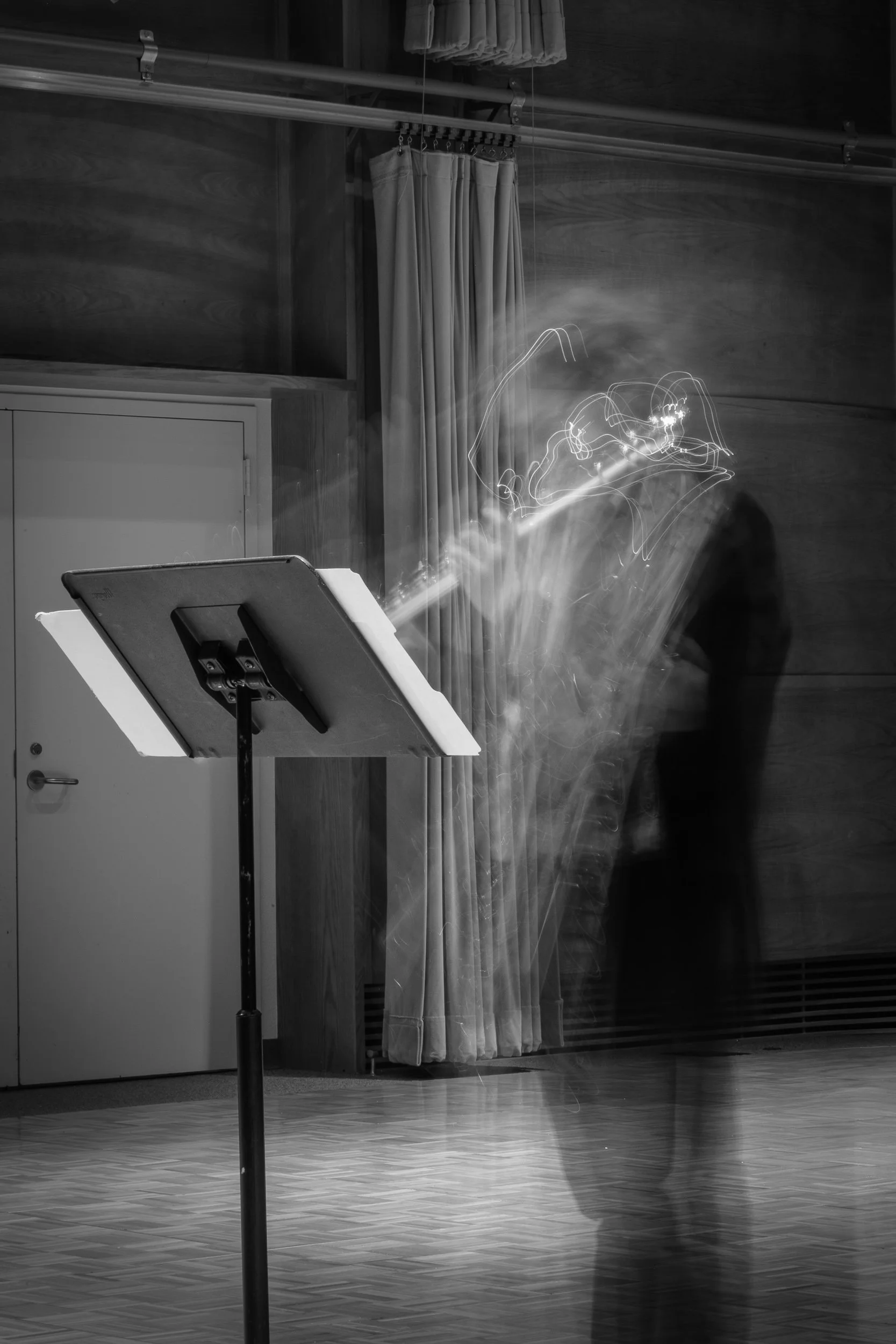
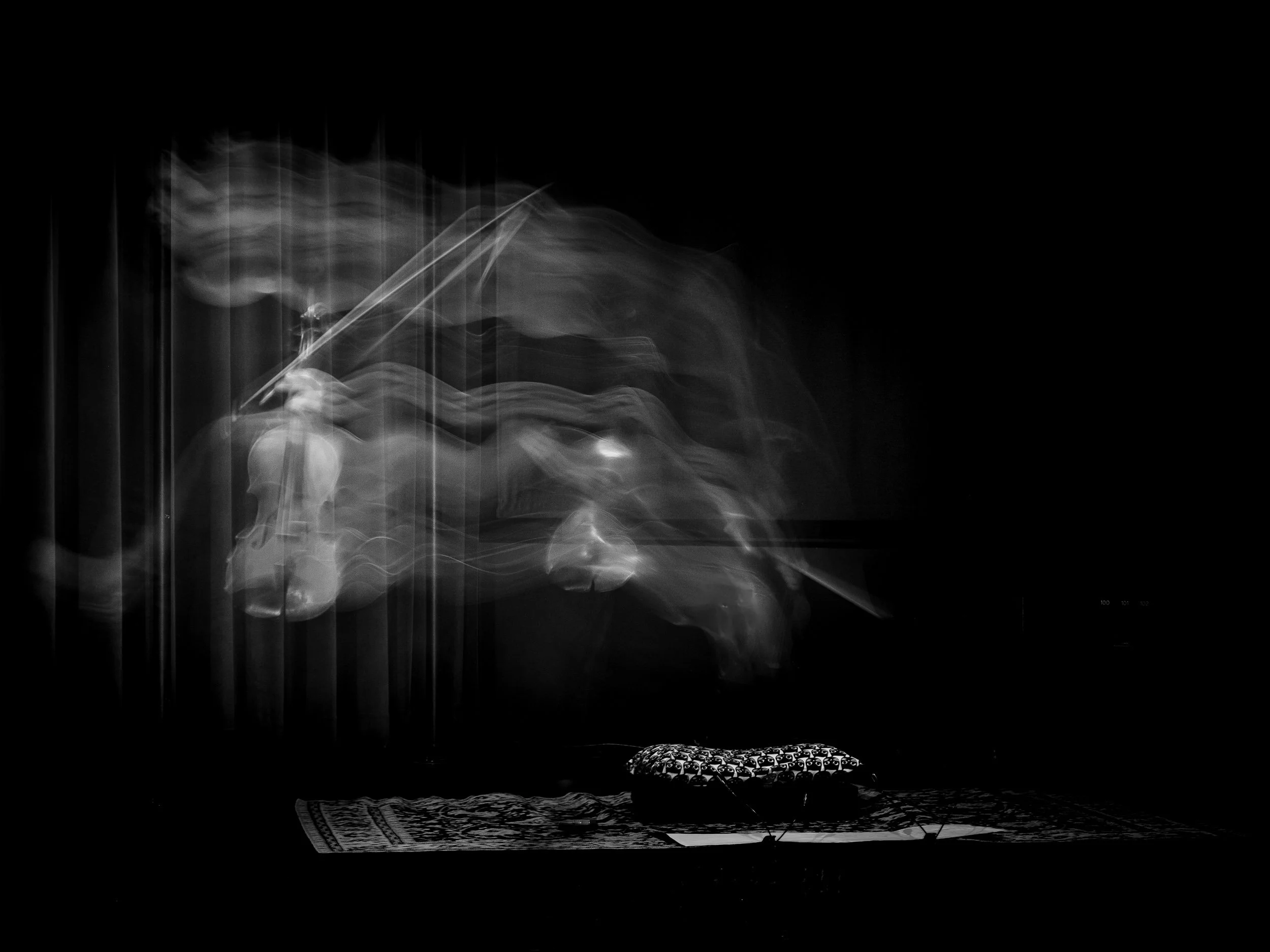
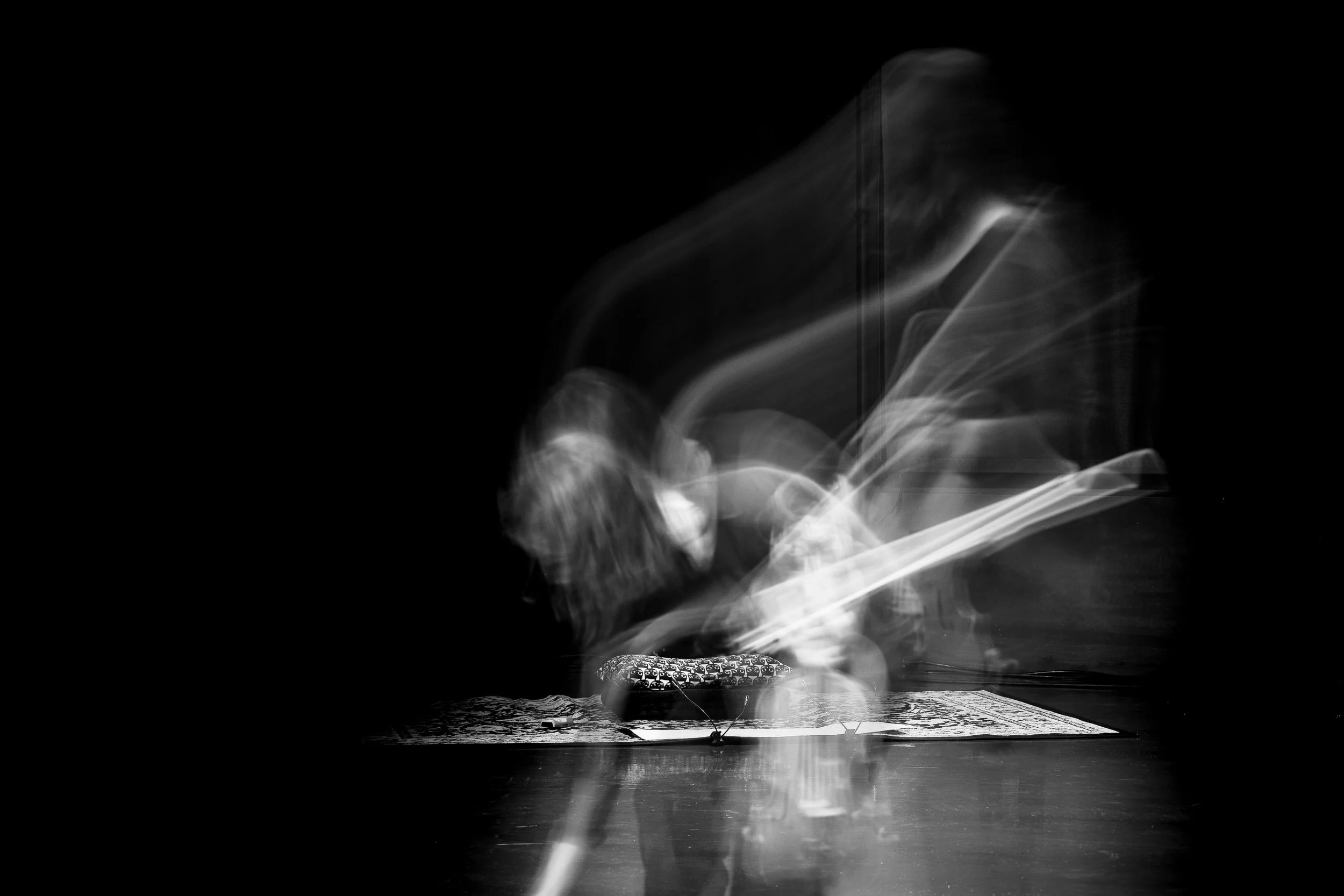
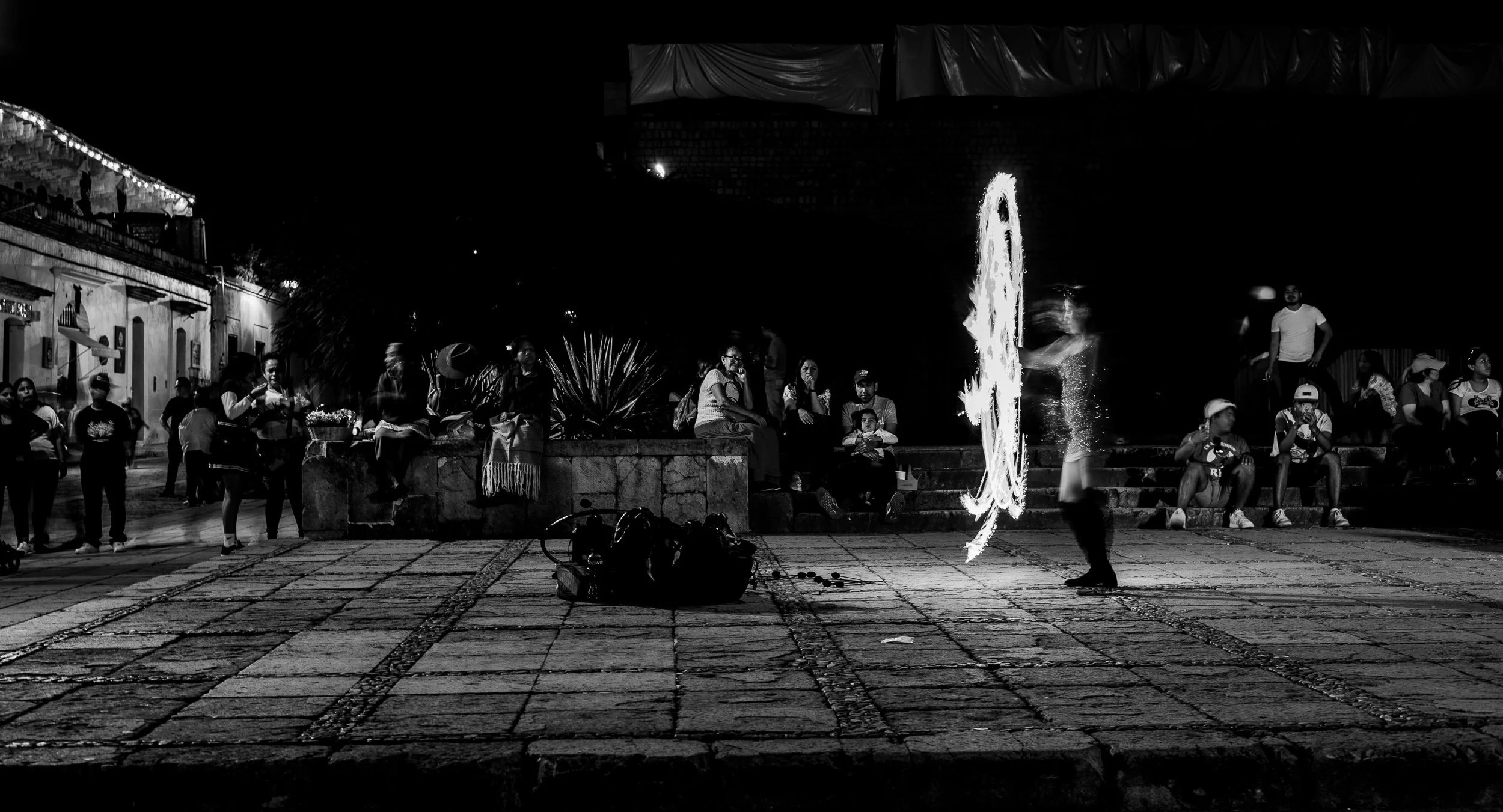
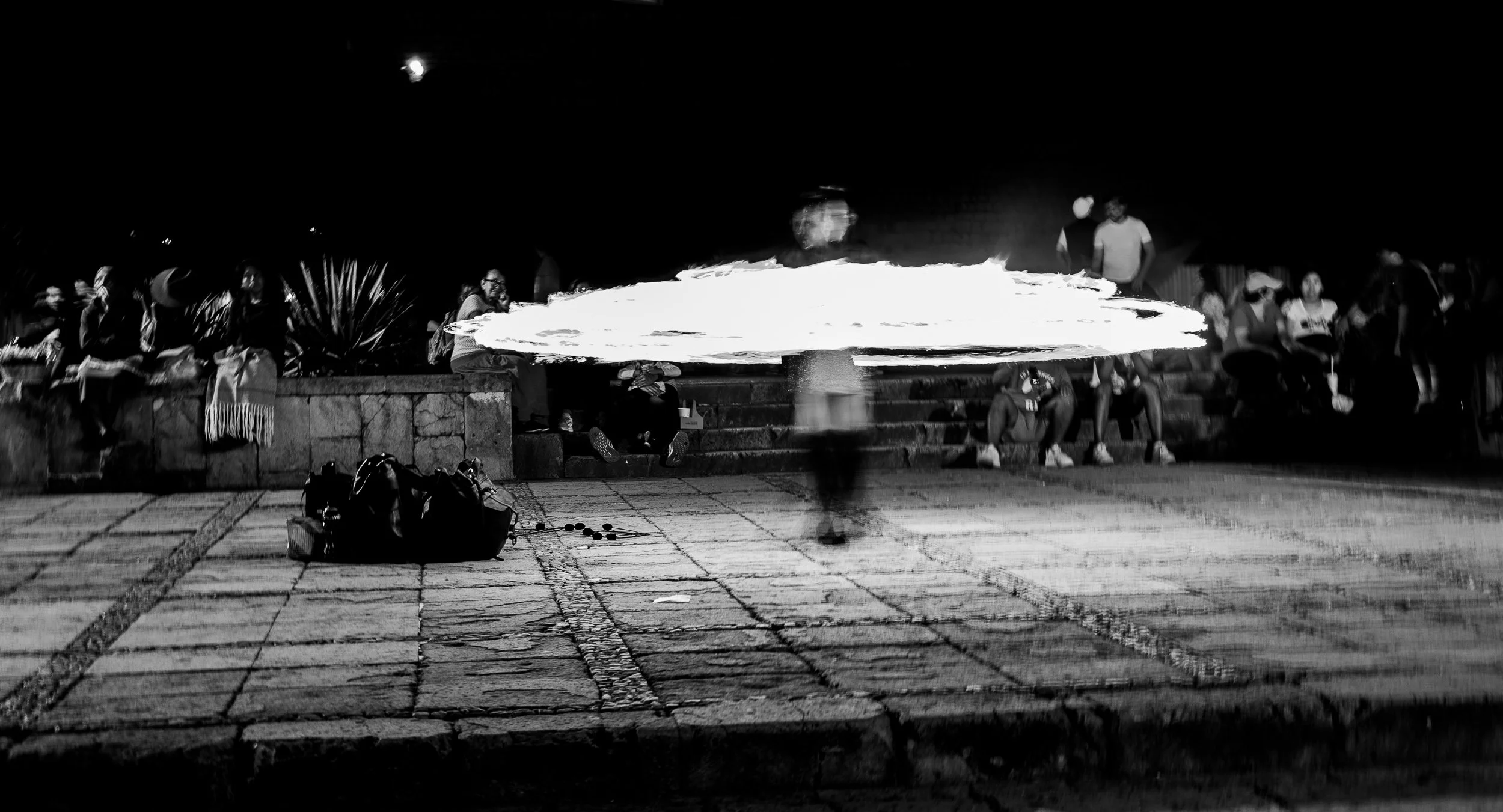
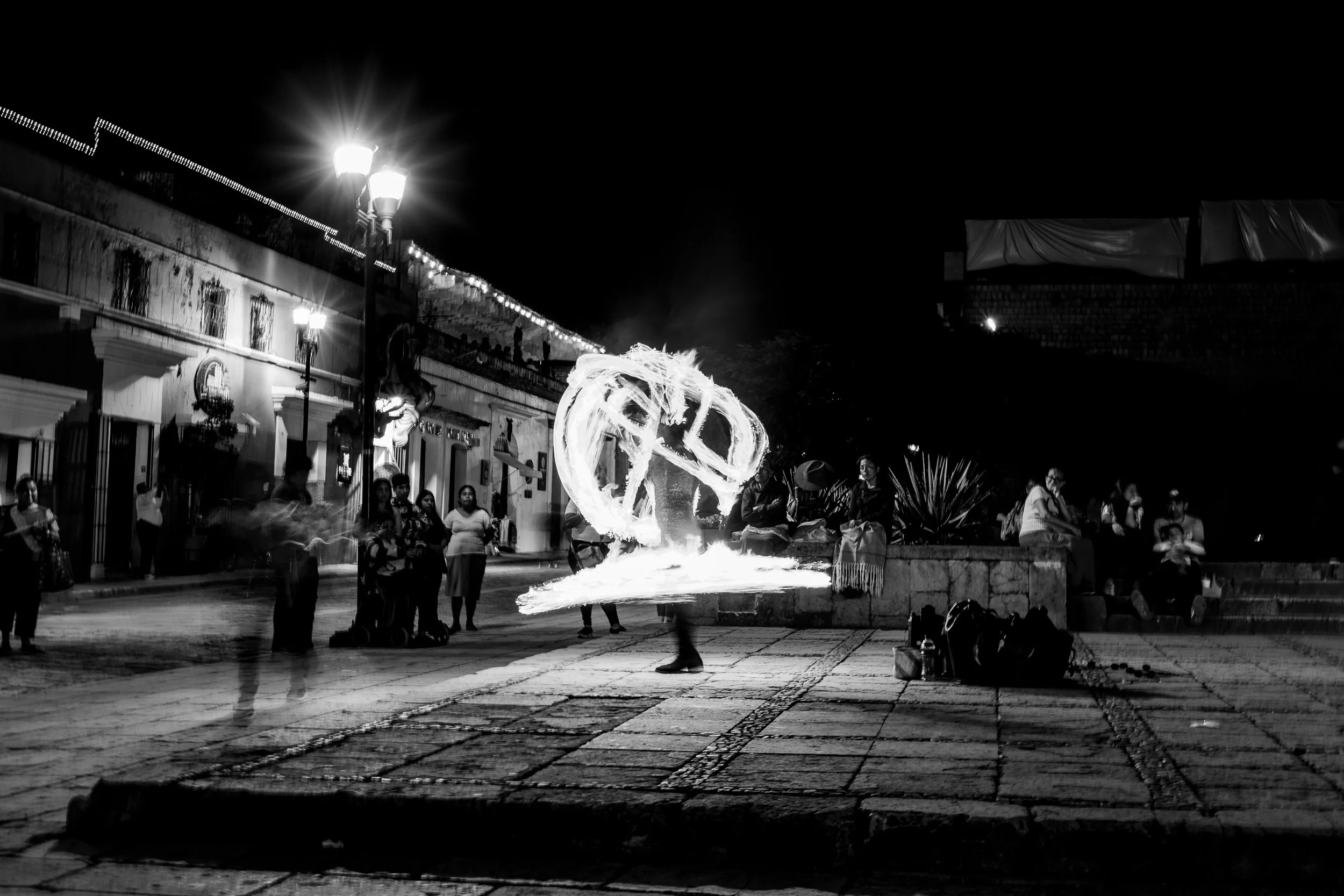
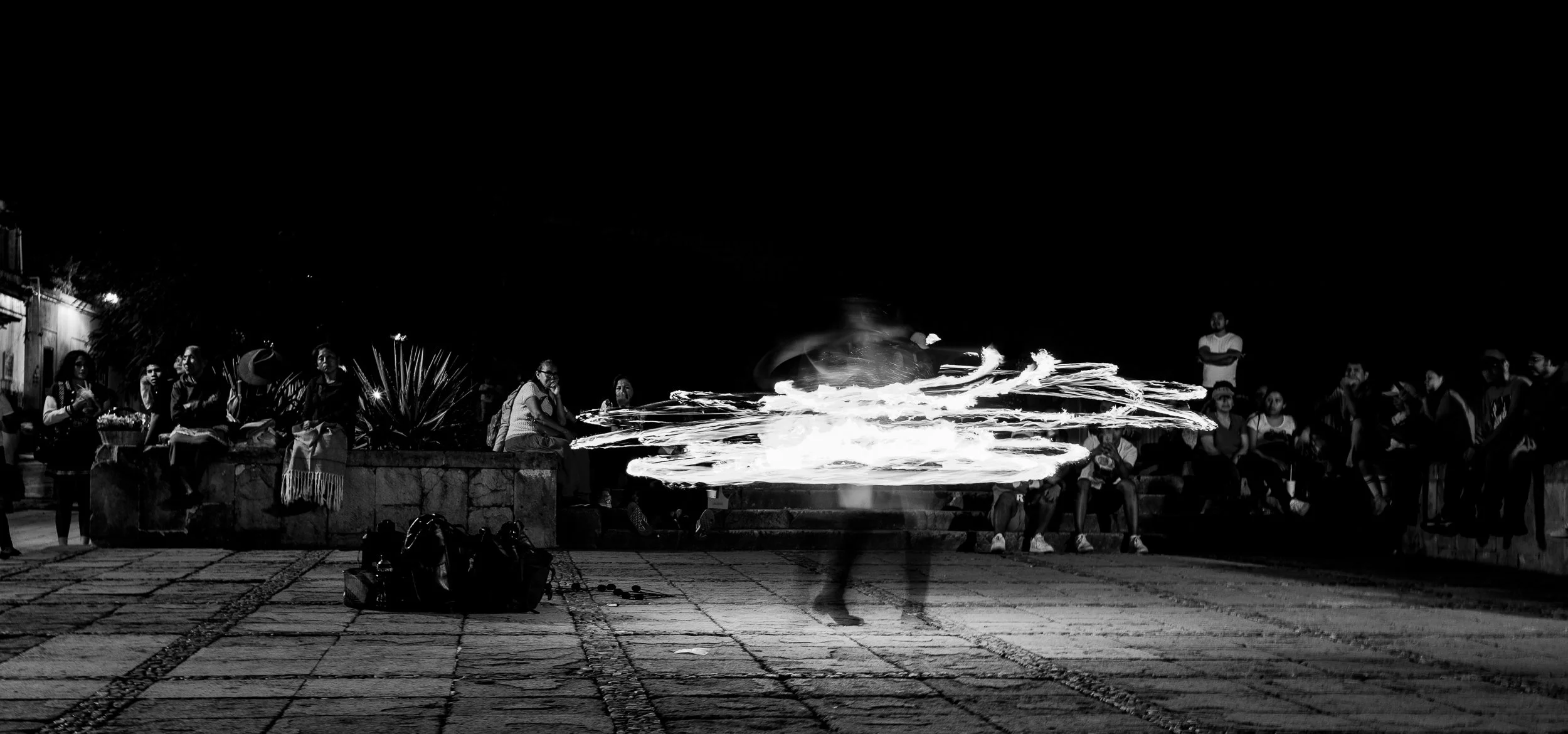
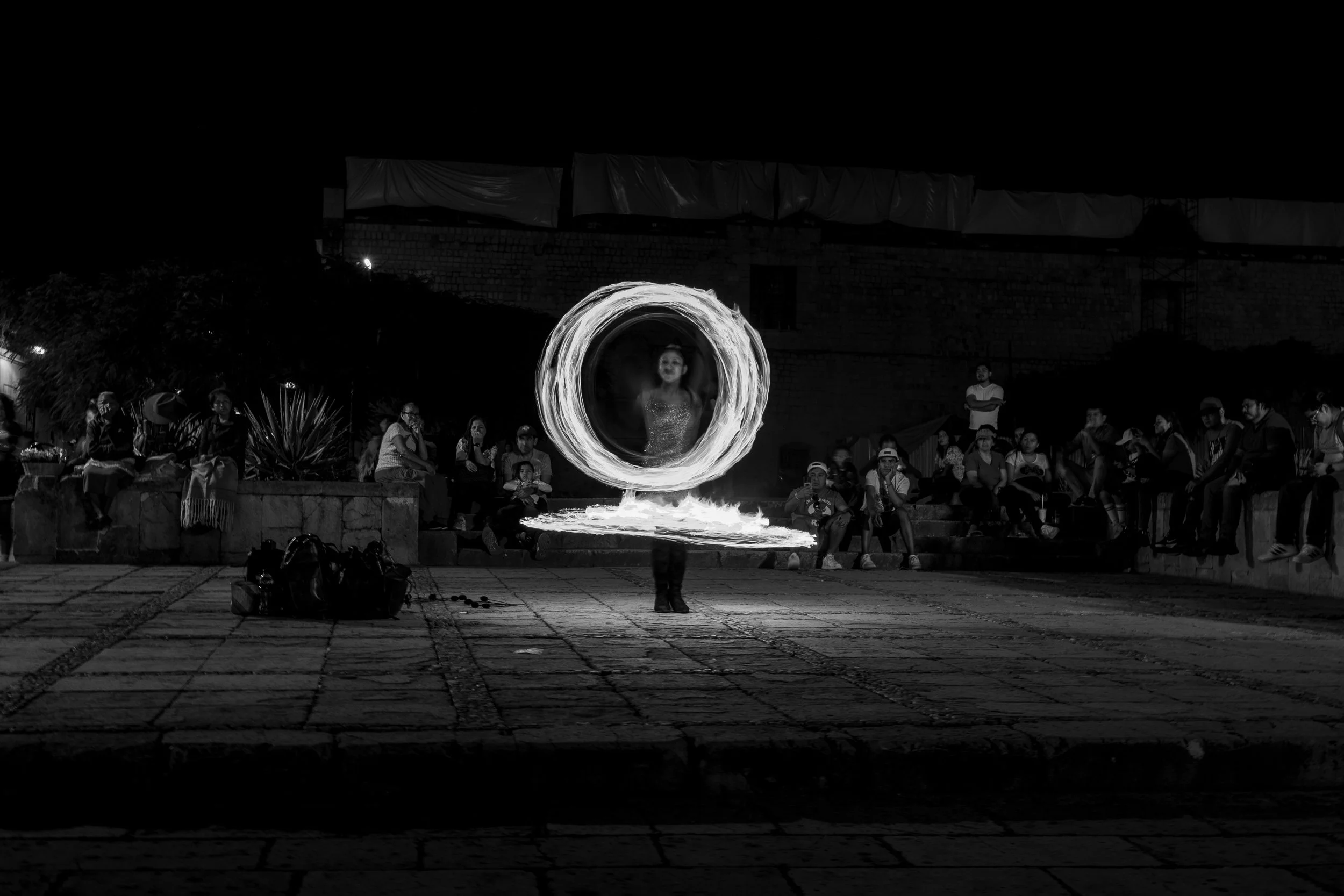
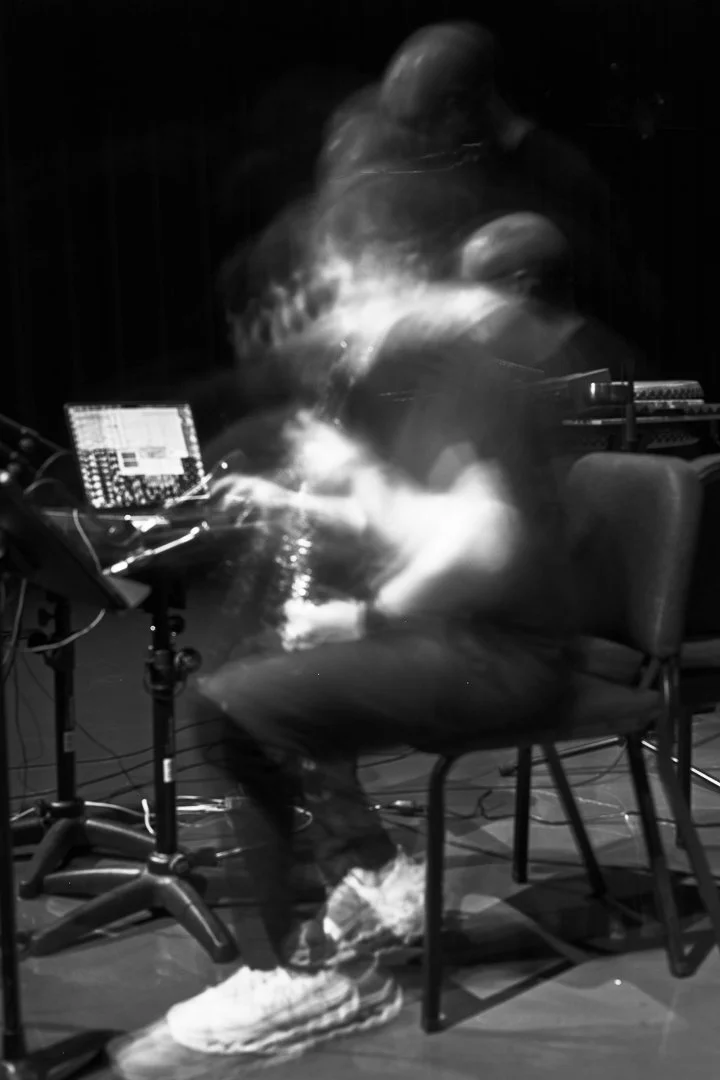
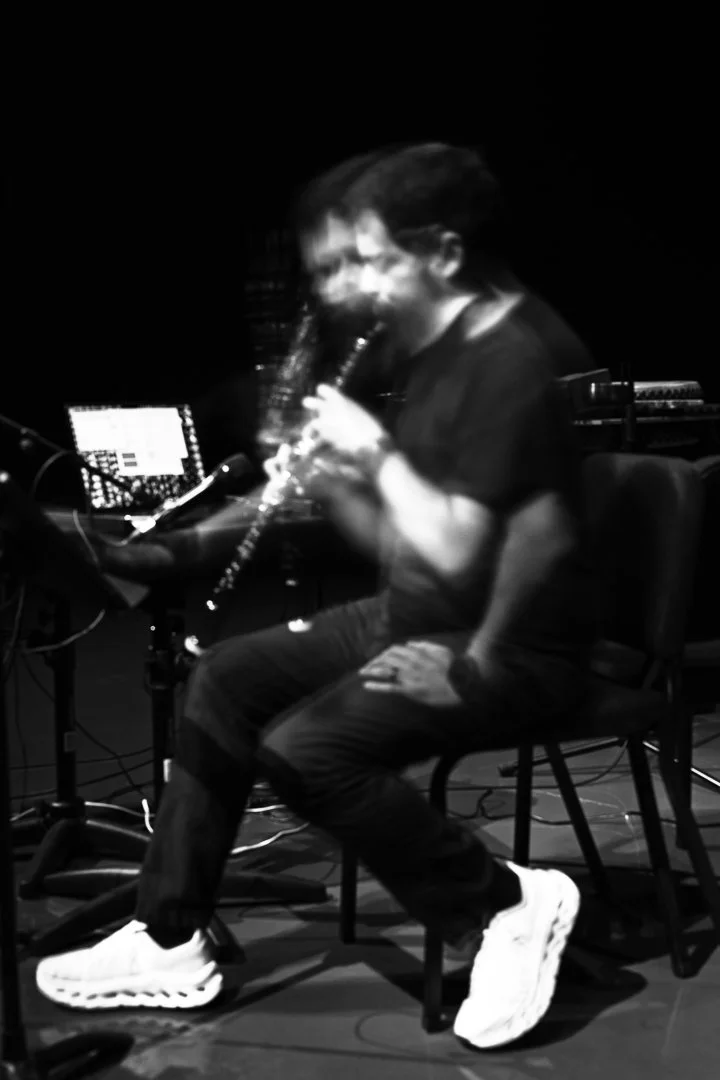
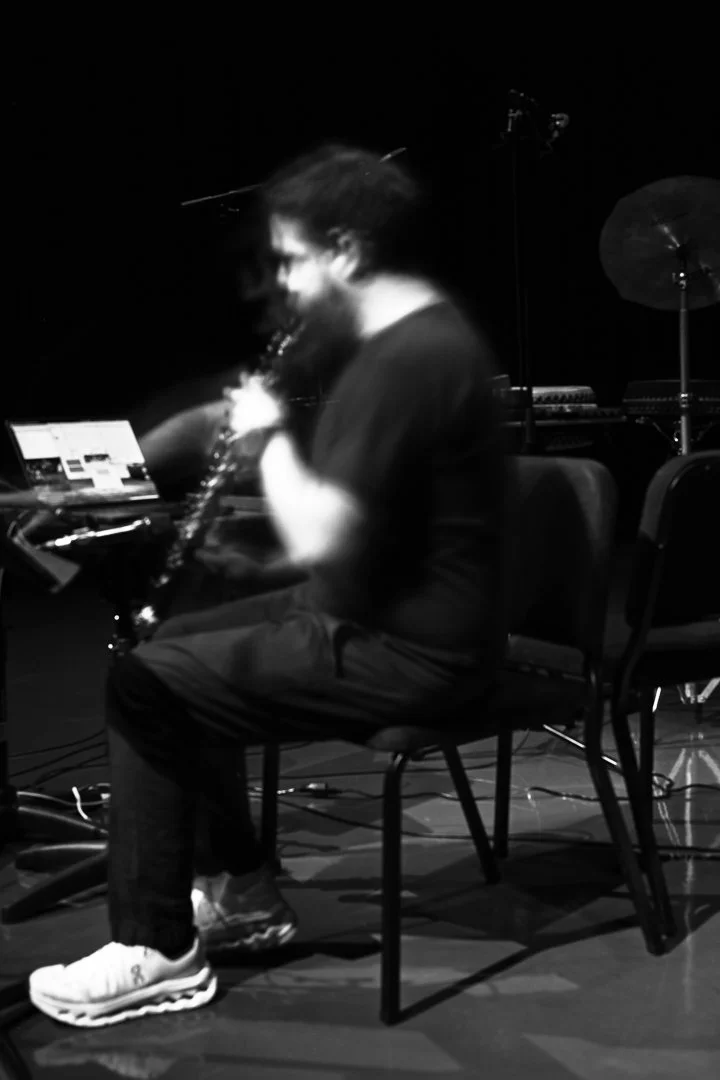
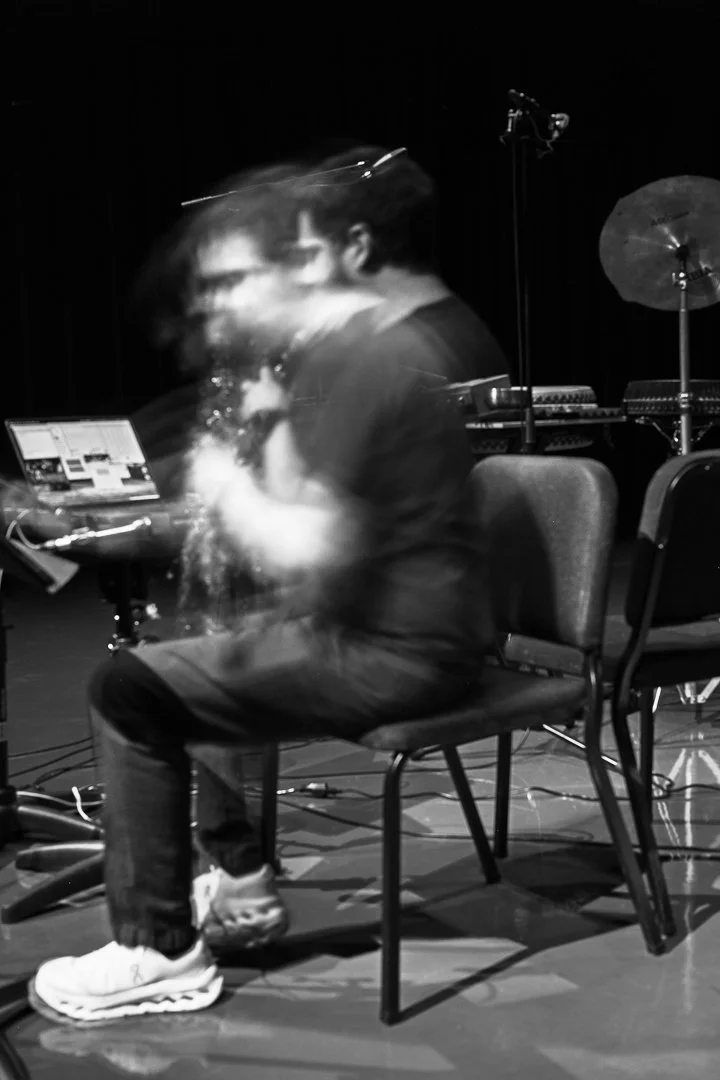
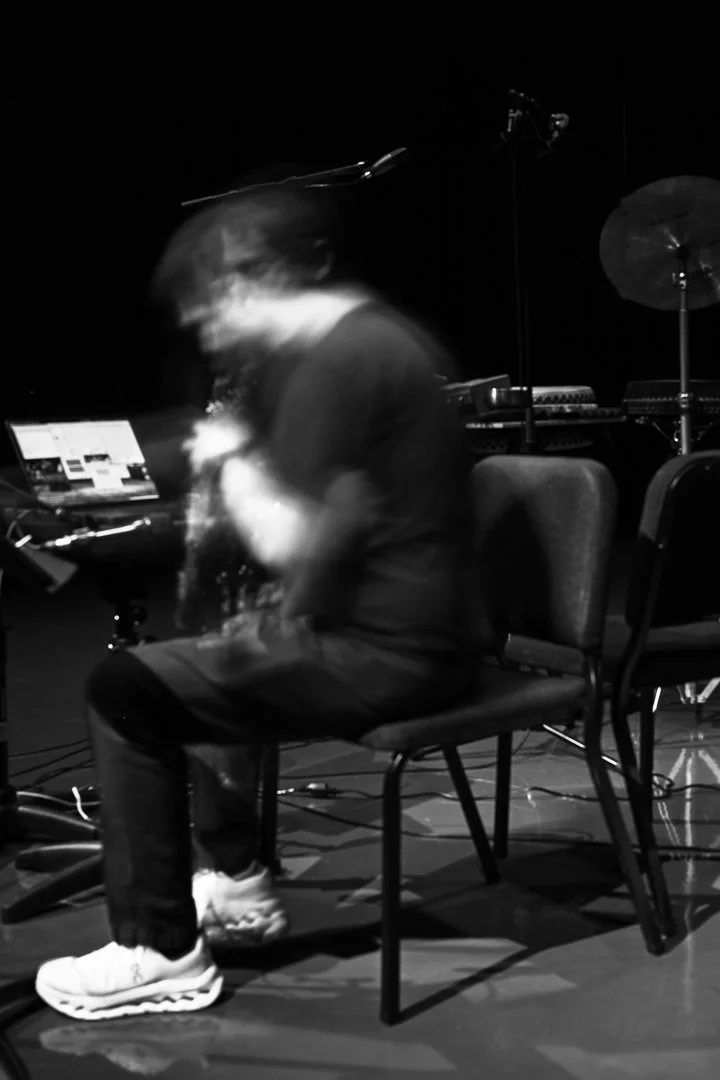
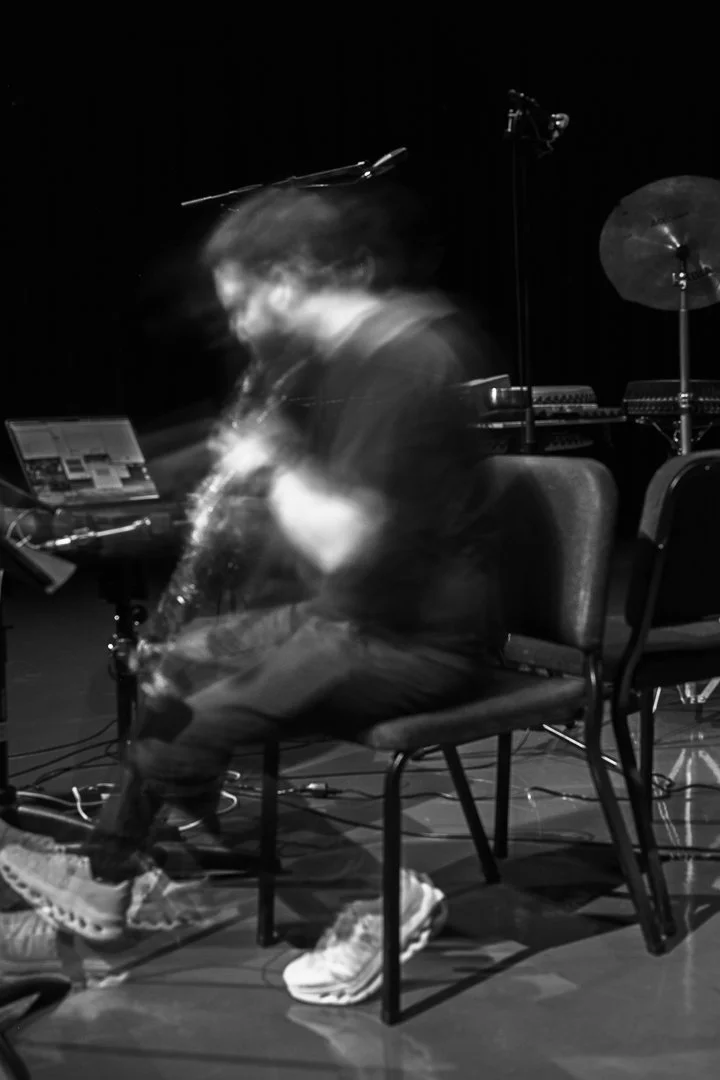
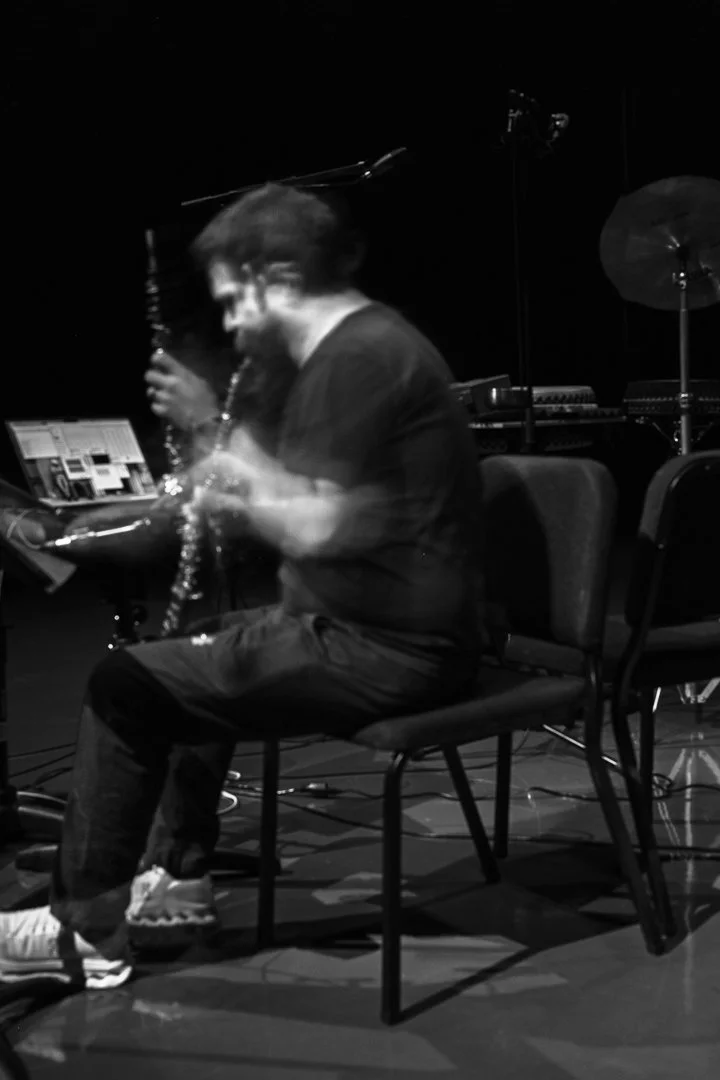
When I open the camera shutter during a live concert and close it several seconds later, what the lens captures is not a moment. It is many moments collapsing into one: a conductor's arm as a white arc, ghostly bows moving across strings, a musician who stood and sat again within the same frame. The result is not a blur. It is a record of time accumulating.
That record is the raw material for everything else.
The Loop
I photograph a live performance using long-exposure techniques. I convert the image into audio using two sonification programs, which translate pixel brightness into pitch and amplitude. I compose from that material. I perform the composition. And then I photograph the performance again. The loop closes and begins again.
Why Time
The question behind all of this is simple and very old: can you stop time? Can an image, or a sound, create the feeling that time is not passing but simply is?
Photographers like Hiroshi Sugimoto left his shutter open for entire film screenings. Alexey Titarenko blurred crowds into spectral forms through long exposure. Michael Wesely compressed thirty-four months of urban construction into a single frame. Composers like Éliane Radigue and Alvin Lucier used sustained drones and recursive recording to dissolve the listener's sense of clock time. What connects them is a shared strategy: accumulate duration until linear time gives way to something else. I call that something else a perpetual present.
My practice lives in the space between these two traditions, image and sound, and the loop that connects them is the research.
The Intermedial Concert
In performance, long-exposure photographs from previous cycles are displayed in the concert space while new music is performed live, and a camera is already open, collecting the current performance into its next image. The audience is surrounded by time in three forms: the preserved duration of past performances on the walls, the unfolding present of the music, and the future being collected in the open lens.